



Professor Joungho Kim of our School, known as the “Father of HBM (High Bandwidth Memory),” has received the Science and Technology Innovation Award from the Daejeon Metropolitan City Development Committee in recognition of his contributions to the development and commercialization of HBM technology.
The Daejeon Metropolitan City Development Committee (Chairman Lee Geon-seon) held an award ceremony at Lotte City Hotel Daejeon on the morning of the 15th and presented Professor Kim with the Science and Technology Innovation Award.
Explaining its decision to select Professor Kim as the award recipient, the Daejeon Metropolitan City Development Committee stated, “Over the past 30 years, Professor Kim has continued his research and technology development in next-generation memory semiconductors, including HBM (High Bandwidth Memory), HBF (High Bandwidth Flash), and HBS (High Bandwidth SRAM), making significant contributions to strengthening Korea’s global competitiveness in AI semiconductors.”
Professor Kim is recognized for first proposing the core concept and basic architecture of HBM and for directly participating in key design work and technical validation during HBM development in 2009. His contributions helped SK hynix commercialize HBM for the first time in the world in December 2013.
Based on these research and development achievements, Professor Kim is known in academia and industry as the “Father of HBM.” In particular, he has continuously conducted research into key technologies essential to HBM implementation, including through-silicon vias (TSVs), three-dimensional (3D) semiconductor stacking, hybrid bonding, silicon interposers, and signal and power integrity (SI/PI) design, laying the technological and academic foundations for HBM.
HBM has become a core component of AI semiconductors, with its importance growing as markets for agentic AI and high-performance computing (HPC) have expanded rapidly in recent years. High-bandwidth memory is essential for rapidly processing the enormous volumes of data required to train and run inference on large-scale AI models, making HBM a key resource in the global semiconductor industry.
Lee Geon-seon, Chairman of the Daejeon Metropolitan City Development Committee, said, “Professor Kim is a scientist who has enhanced Daejeon’s standing as a city of scientific research by pioneering innovative technologies that are reshaping the global semiconductor industry. He is also one of Daejeon’s most valuable assets and a treasured resource. Through this Science and Technology Innovation Award ceremony, established to convey the collective appreciation of approximately 1.5 million Daejeon residents to Professor Kim, I hope Daejeon’s scientific and technological capabilities and industrial competitiveness will become more widely recognized.”
He added, “I also hope this occasion will inspire future generations of scientists and engineers to recognize the importance of challenge and innovation, and serve as a meaningful milestone in Daejeon’s growth into a globally recognized innovation city in advanced scientific and technological fields, including AI and semiconductors.”
Professor Kim expressed his appreciation, saying, “I would like to thank the Daejeon Metropolitan City Development Committee for presenting me with this meaningful award. As HBM is one of the key infrastructure technologies powering the AI era, I will continue to devote myself to developing next-generation technologies and nurturing talent so that Korea can remain a global leader in memory and AI semiconductors.”
Meanwhile, the Daejeon Metropolitan City Development Committee is a nonprofit incorporated association established in 1973 by local business leaders and experts in Daejeon. It leads public-private cooperation by researching policies to promote economic activity and urban development in the region and making recommendations to government agencies, including Daejeon Metropolitan City Hall.


Dr. Simok Lee of Prof. Jae-Woong Jeong’s laboratory (Bio-Integrated Electronics and Systems Lab) received both the Future Promising Researcher Award and the Excellent Paper Award at the 2026 Fall Conference of the Korean Society of Micro and Nano Systems, held in Gyeongju from September 30 to October 2, 2026.
The conference covers micro- and nano-system technologies that are becoming core technologies across future industries. Its topics range from the intelligent integration of unit devices such as smart sensors and actuators through convergence with AI, advanced materials, and big data, to applications in semiconductors, secondary batteries, healthcare, displays, smart mobility, humanoid robots, smart factories, and climate change response.
The Future Promising Researcher Award is presented, after a rigorous review, to early-career researchers who demonstrate outstanding research capability and potential to lead the field. The Excellent Paper Award is given to papers presented at the conference that show excellent academic contribution and completeness.

In this work, Dr. Lee proposed a liquid-metal physically unclonable function (LM-PUF) that resists both physical and digital cloning. Two liquid metals, gallium and Field’s metal, are randomly dispersed in a polymer to form particles with individually different compositions. Because the two metals are visually indistinguishable, physical replication is infeasible. In addition, the device is designed so that its unique thermal pattern appears only during a brief temperature transition, and the supercooling behavior of liquid metal is exploited to hide authentic keys among decoy keys. Together, these features provide resistance to machine-learning-based digital cloning attacks as an intrinsic property of the material. The device is also compatible with conventional processes such as stencil printing and molding, enabling practical applications including counterfeit-resistant currency and QR-code-based authentication.
The work was presented orally and as a poster at the conference under the title “Machine-Learning-Attack-Resistant Physically Unclonable Functions Using Liquid-Metal Microparticles,” and received the Excellent Paper Award. In addition, Dr. Lee received the Future Promising Researcher Award in recognition of accumulated research achievements in liquid-metal-based soft electronics and future potential.
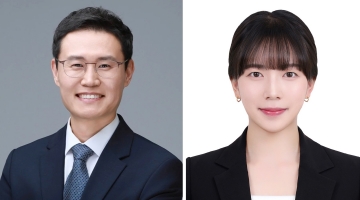

Eun Young Jeong, a Ph.D. student in Professor Jae-Woong Jeong’s Bio-Integrated Electronics and Systems Lab, received the Best Abstract Award, the conference’s highest honor, at the 2026 Korea BCI Society Fall Conference, held from September 30 to October 2, 2026, at Sungkyunkwan University’s Natural Sciences Campus.
Organized by the Korea BCI Society, the conference provided a forum for sharing the latest research advances and technological developments in brain–computer interfaces (BCIs). Experts from Korea and abroad presented research spanning neuroscience, clinical studies, neural interface hardware, and artificial intelligence, and discussed future directions for next-generation BCI technologies.
In this study, Jeong proposed an IoT-enabled wireless optofluidic implant capable of precisely delivering drugs and light to the brains of freely behaving animals. By integrating drug delivery and optogenetic neuromodulation into a single implantable device, the platform supports remote control and scheduled operation, enabling long-term neuromodulation experiments with reduced need for on-site intervention by researchers.
The research, presented under the title “IoT-Enabled Wireless Optofluidic Implant for Programmable Drug Delivery and Optogenetic Neuromodulation in Freely Behaving Animals,” received the Best Abstract Award in recognition of its technical excellence in integrating drug delivery and optogenetic neuromodulation into a wireless neural interface.
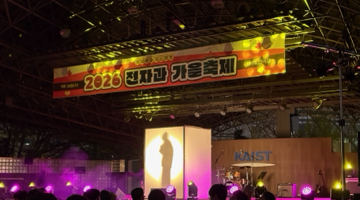

The KAIST School of Electrical Engineering (KAIST EE) held its 2026 Fall Festival on September 30 at the W9 Outdoor Theater. Oh Seok-jun, CEO of IHL GYEONG Architectural Firm Co., Ltd., donated 10 Samchuly bicycles worth approximately KRW 2 million as prizes for the festival. The bicycle prizes were enthusiastically received by the students in attendance.
Organized by the KAIST EE Student Council, the festival ran from 5:30 p.m. to 7:30 p.m. and was open to all members of KAIST EE, including undergraduates (double majors and minors) and graduate students. On the cool autumn evening, students began crowding into the outdoor theater as soon as admission opened at 5 p.m., eager to secure seats.
The donated bicycles were awarded to students in two rounds. Four Samchuly bicycles went to the four finalists in the campus singing competition “Hidd-EE-n Singer,” while six were presented to the winners of the Fall Festival prize drawing.
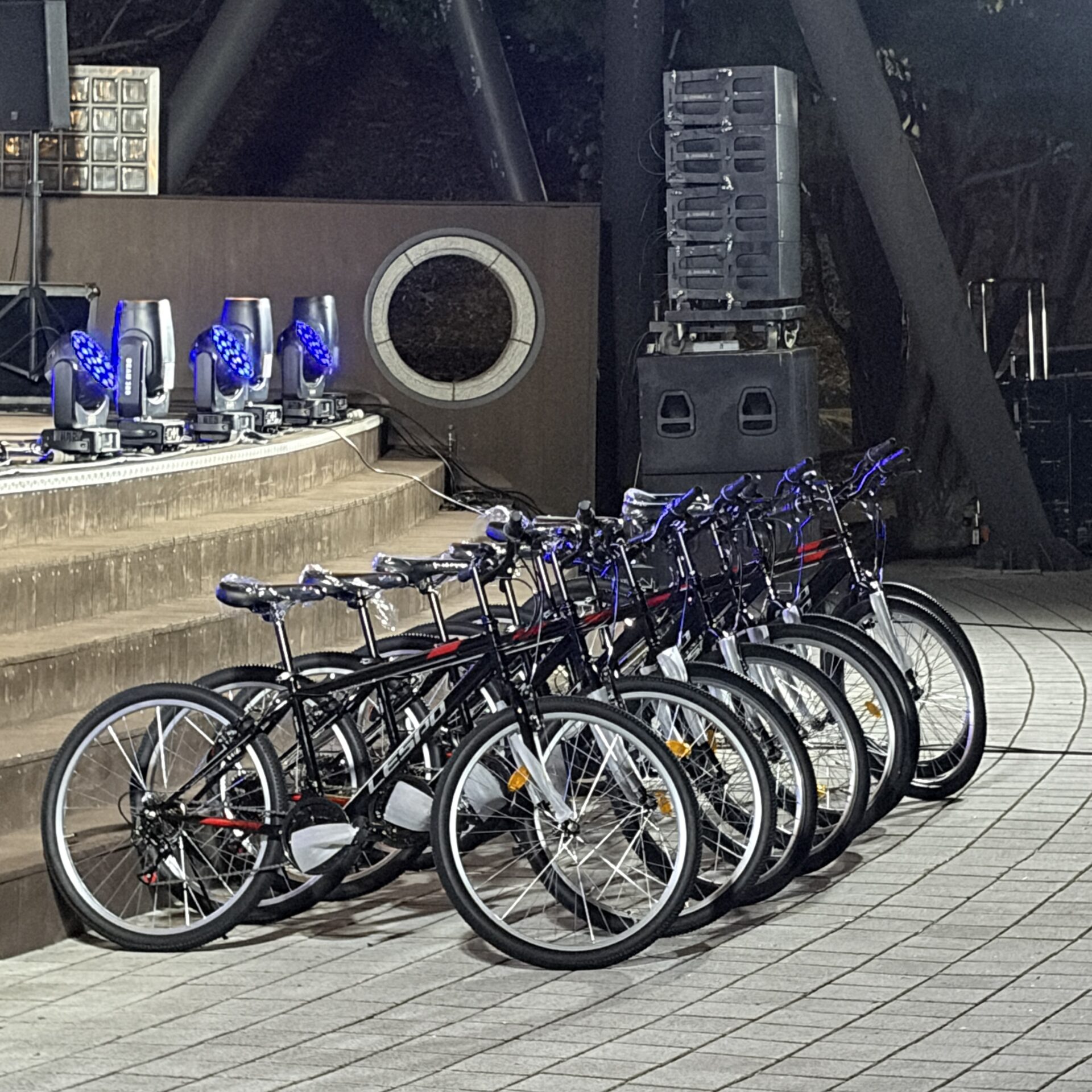
The donation was intended to provide practical, direct support to KAIST EE students. Bicycles are among the most common ways for KAIST students to get around the expansive campus, which is why they were chosen for the donation. As items that students could put to immediate use in their daily lives, the bicycles were a natural fit for both the purpose of the donation and the festival prizes.
The festival also featured a wide-ranging program. The event opened with a performance by “Happy Circuit,” the KAIST EE student band, followed by “Hidd-EE-n Singer,” a competition in which contestants were judged solely on their voices and singing ability rather than their identities. The excitement continued with “Hidd-EE-n Professor,” where a professor took the stage to play a five-clue guessing game with students, and a beer-chugging contest. A barbecue was held beside the stage, allowing students to share food and enjoy a relaxed evening together.
The crowd’s excitement rose noticeably whenever bicycles were at stake. Cheers erupted during the Hidd-EE-n Singer final as the contestants delivered spirited performances. Near the end of the event, each name called in the prize drawing was met with applause and shouts of excitement. Offering an unexpected stroke of luck to students who stayed until the end, the drawing brought the festival to a memorable close.
With generous outside support and careful planning by the Student Council, the Fall Festival brought members of the KAIST EE community together to connect and celebrate. The event concluded on a high note.
The KAIST EE Student Council plans to continue organizing events that everyone in the community can enjoy together.
By Jihwan Lee <davidjlee@kaist.ac.kr>
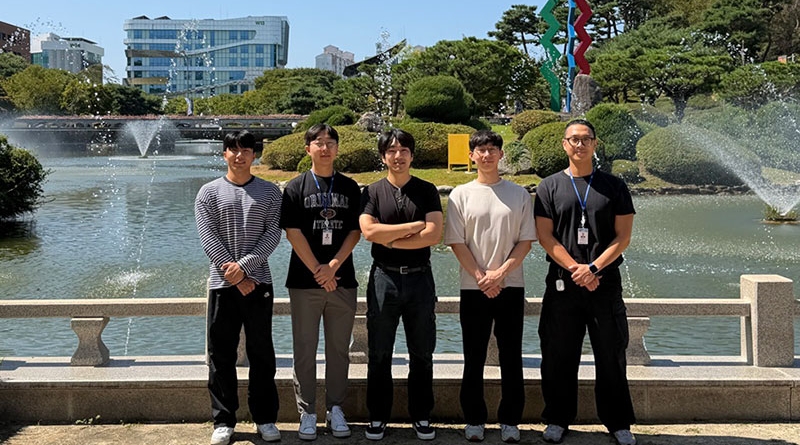
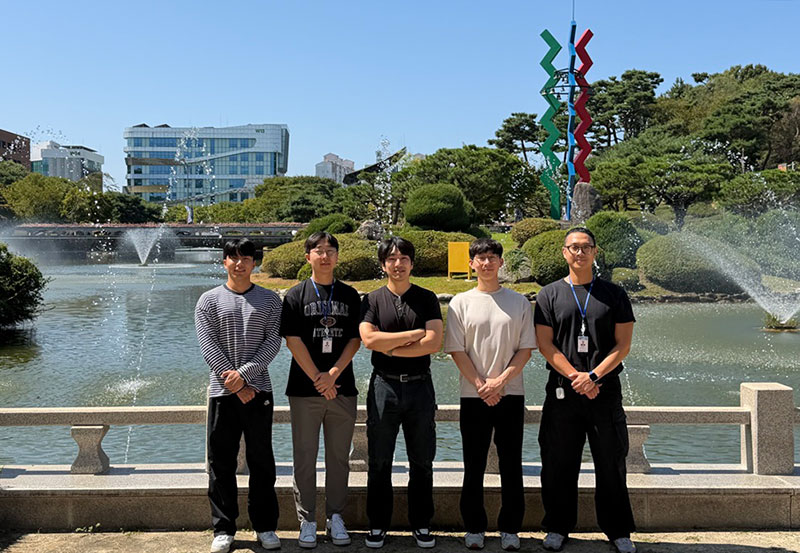
For a wearable device to distinguish walking from a brief swing of the arm, it must recognize how a movement changes over time. Korean researchers have developed a technology that stacks semiconductor devices with different response speeds, allowing them to recognize both a change that has just occurred and the changes before it. The technology could be applied to small devices that are worn on or attached to the body to analyze movement and physiological signals.
A research team led by Professor Jimin Kwon from the Department of AI Systems, together with researchers from UNIST (President Chong Rae Park) and POSTECH (President Seong Keun Kim), has made a solid thin film from a material that contains ions and used it to stack semiconductor devices with different response speeds in multiple layers.
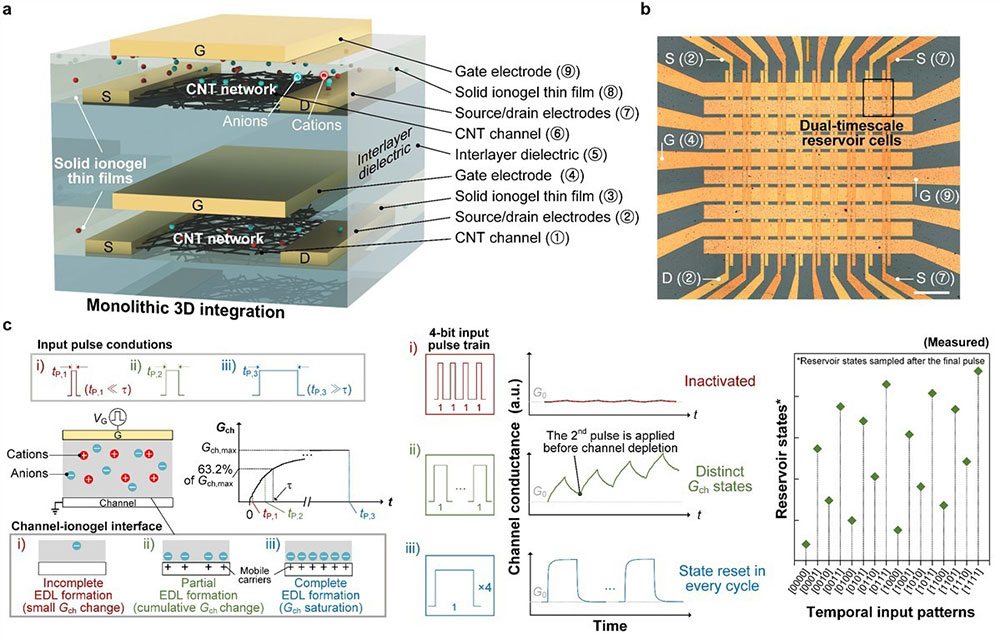
In these devices, applying a voltage moves the ions within the material and changes the flow of current. When the voltage is removed, the ions require time to return to their original state. As a result, the effect of previous signals remains in the device for a short time. This slow movement has generally been considered a disadvantage, but the research team used it to identify earlier inputs.
The main challenge was controlling how long this effect lasts. Until now, such materials have mostly been liquids or soft gels, which made it difficult to fabricate the devices precisely or to stack them in multiple layers.
To address this challenge, the team made the material into a solid thin film, known as a solid-state ionogel, and adjusted the amount of ions in the film as well as its thickness. This allowed them to create devices that respond to signals either quickly or slowly. When the two types were stacked, one layer responded to the most recent signal, while the other responded to signals that had accumulated over a longer period.
The researchers confirmed that the devices could distinguish all 16 patterns created when four consecutive input signals are turned on or off in different combinations. Using the responses measured from the devices, they also built a simulation model of a system that classifies videos of moving handwritten digits. The model achieved validation accuracies above 90% for sequences of moving images played at different speeds.

The team fabricated the devices on both 4-inch wafers and flexible substrates. Their electrical characteristics remained stable for 55 months after fabrication.
The results could be used to develop technologies for processing information that changes over time, such as movement and signals from the body, directly on small devices. Further validation is needed to determine how the technology performs, and how much power it saves, in actual smartwatches.
“These devices can be fabricated on large-area substrates using existing thin-film semiconductor processes, and they can also be stacked in multiple layers,” said Professor Kwon. He added that the technology could be developed into AI chips that analyze movement and physiological signals for devices that must operate with low power consumption, such as smartwatches.
Research Professor Haksoon Jung from KAIST is the first author of the study, and Professor Yong-Young Noh of POSTECH and Professor Jimin Kwon of KAIST are the co-corresponding authors. The findings were published in Advanced Materials on June 30.
- Paper title: Monolithic 3D-Integrated All-Solid Ion-Gated Carbon Nanotube Transistors With Tunable Ionic Conductance for Multi-Timescale Reservoir Computing
- DOI: 10.1002/adma.202523703
This research was supported by the National R&D Program through the National Research Foundation of Korea (NRF), funded by the Korean government (Ministry of Science and ICT, MSIT) (RS-2023-00281195 and RS-2024-00355384), and by the Korea Planning & Evaluation Institute of Industrial Technology (KEIT), funded by the Ministry of Trade, Industry & Energy (MOTIE, Korea) (RS-2024-00417909).
This article was originally written in Korean. It has been translated into English, with some expressions lightly adapted for readability.
Jobs Disappear, Questions Remain
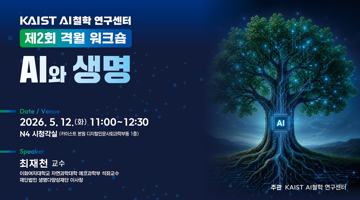
A Report on the KAIST AI Philosophy Research Center’s Second Bimonthly Workshop, “AI and Life”
Written by: Claude (Anthropic Claude Sonnet 4.6)
Reviewed by: Hyeonmin Han (EE Newsletter Student Reporter)
This article was written entirely by AI, from start to finish. Claude organized the transcript, structured the arguments, wrote the body text, and even wrote this notice, while reporter Hyeonmin Han fact-checked and reviewed the tone. The reason for disclosing this is explained at the end of the article.
On May 12, KAIST’s AI Philosophy Research Center held its second bimonthly workshop at the N4 Auditorium. This session’s theme was “AI and Life,” featuring a lecture titled “From AI to SI: From Artificial Intelligence to Symbiotic Intelligence,” delivered by Professor Choe Jae Chun, Chair Professor at the Division of EcoScience, Ewha Womans University.
The full video of the lecture is available via the QR code below.



“This One Feels Different”
Professor Choe opened his lecture with a candid admission: he is not an AI expert. He said that when he was first invited, he nearly declined upon seeing the phrase “AI philosophy.” Perhaps precisely because of that distance, his observations as an outsider felt all the sharper.
He began by revisiting the humanities’ long-standing anxieties about technological change. During the Industrial Revolution, and again when the internet emerged, there were warnings that humanity itself would collapse — yet life has, on the whole, kept improving little by little. “If those fears had come true,” he said, “we would be living amid utter chaos right now.”
Still, he suggested AI feels different. “It seems likely to bring about a kind of social change that is fundamentally different from anything earlier technologies produced,” he said. He pointed to two reasons.
First, this time entire occupations disappear. Past waves of technological change also eliminated jobs, but they created new ones at the same time. This time, he argued, the speed and scale are different.
Second, and more importantly, this time the balance of power does not shift. Historically, when new technology emerged, incumbent industries collapsed and new leaders took their place. But with AI, the platform companies that already dominate the world’s ten largest corporations are the ones racing furthest ahead. Rather than a changing of the guard, power is flowing toward reinforcing the incumbents even further — a dynamic Professor Choe warned could also threaten democracy.
The Switchboard Operator, and Jensen Huang
Facing the fear that jobs will vanish, Professor Choe offered a somewhat different perspective.
He shared a story from his own childhood. Once, picking up a telephone connected you to the exchange, where an operator would route your call wherever you wanted to go. Countless women once worked in that profession — a job that no longer exists anywhere in the world. “It came into being within my lifetime,” he said, “and it disappeared within my lifetime too,” a line that struck an oddly poignant chord.
He also pointed to the Luddite movement of the Industrial Revolution: factory workers smashed the machines, but the ones who benefited were not them — it was the factory next door that hadn’t smashed its machines. He then quoted something Jensen Huang reportedly said in Gyeongju, a line that should resonate especially with KAISTians.
“AI won’t take your job. Someone who has learned to use AI before you will.”
In other words, the problem isn’t the technology itself — it’s who uses it first, and how.
“A Species That Outsources Its Brain”
During the discussion session, Sang Yup Lee, Vice President for Research at KAIST, introduced an intriguing study. In Singapore, medical staff were given an AI-assisted diagnostic reading tool; when they were asked to read scans again without AI one to two years later, their skills had fallen below the level they had been at before the tool was introduced.
Professor Choe’s answer was remarkably candid. Asked whether there was any way to prevent this decline in human ability as AI dependence deepens, he said, “I think that would be difficult.”
Homo sapiens, he explained, is a species optimized to outsource its brain. By not cluttering our minds with unnecessary information and instead using that freed-up space creatively, we survived in competition with Neanderthals, who seemed better adapted to their environment in many ways. Even our habit today of not bothering to memorize phone numbers is an extension of the same tendency.
“If we just let it happen, I think our species will drift in that direction,” he said. Yet, echoing Darwin, he added that because humans are a species that adapts to change and is capable of mixing its genes, we will likely endure — “thin, but long,” as the Korean saying goes. The road there will be bumpy, though, and the real challenge, he said, is how society helps the people who inevitably get hurt along the way hold on.
“The Age of the Humanities Is Opening”
The most striking moment of the lecture was an unexpected note of optimism.
During the Q&A, a graduate student asked: I understand the humanities matter, but I don’t know how to actually go about learning them. Professor Choe’s answer was unexpected.
“You may not need to worry about that.”
People assume that in the AI era, everyone will need to become an AI engineer. In reality, only a small number of people will build the technology; the vast majority will spend their time using it. And the key to using AI well ultimately comes down to asking good questions — and good questions come from people who have read novels and studied philosophy. Rely on a translation app, and your questions stay stuck at the translation app’s level.
Professor Choe recalled that five years ago, when he predicted “philosophy departments will make a comeback,” he was met with skeptical looks from those around him. These days, he laughed, that prediction is becoming reality. He closed the lecture with the thought that the AI era might, counterintuitively, usher in an age of the humanities — and that this shift may not require forcing it, but could simply happen naturally.
Ant Societies and the Awakened Citizen
Professor Choe’s most distinctive perspective came through his discussion of ants.
In ant colonies, only the queen is meant to lay eggs, but occasionally a worker ant tries to lay eggs of its own. When that happens, other worker ants monitor, discover, and punish the offender by eating the egg. It’s a structure in which individual members enforce order for the colony as a whole.
He noted that the internet has given rise to something similar in human society. More people now report and call out wrongdoing, and with cameras everywhere, misconduct has become harder to get away with. Worker ants punish transgressions the moment they spot them, but humans have tended to look the other way even when they knew better. In the AI era, he suggested, every citizen may need to stay more alert than ever.
He pointed to how quickly the MZ generation took to the streets during the martial law crisis, adding, with a note of hope, that this might be “a generation that has already begun adapting to the AI era.”
A Reporter’s Confession
I used Claude to write this article.
Organizing the transcript, extracting the arguments, drafting the piece, and even writing this very confession — all of it has been done by AI. The reporter did not type these sentences.
And yet, an odd feeling lingers. Professor Choe’s words from the lecture keep replaying in my mind: research showing that using AI reduces brain activity, and that within a year or two, ability can fall below what it was before the tool was introduced. The same seems to hold for writing. A USC study (reported in 2026) found that AI-polished writing tends to converge toward a particular persona, erasing the individuality of the person who wrote it.
So whose writing is this, then?
AI is optimized to produce an average. It generates the most plausible combination available within its training data. That’s why AI-written text often has good structure and smooth sentences, yet sometimes leaves nothing behind once you’ve read it. There’s no trace of the choices that usually define writing — what mattered enough to keep, what got discarded, whether an uncomfortable question was avoided or faced.
Paradoxically, the very fact that this confession section was written by AI is itself the evidence. What choices did the reporter make in these sentences? Even the reporter probably isn’t entirely sure.
Professor Choe said the key to using AI well is the question you ask it. A question from someone who has read novels and studied philosophy cannot be the same as a question from someone who hasn’t. So what, then, did the reporter actually do in this article? What questions did he pose to the AI — and were those questions truly his own?
That judgment I’ll leave to you, the reader.
This section was written after the reporter asked Claude: “Write, in the first person, from the perspective of a reporter who used AI to write this article, about what writing means in the age of AI.” The reporter made no edits to it.
About the KAIST AI Philosophy Research Center
The AI Philosophy Research Center, which hosted this workshop, is a research organization that philosophically examines how advances in AI and robotics are reshaping human capability, responsibility, and social life. Rather than simply evaluating technology, the center’s core mission is to connect that inquiry directly to engineering, society, and public discourse — asking what values and institutions should guide the change.
The center’s research is organized into five groups. The AI × Future Civilization group, led by KAIST President Kwang-hyung Lee, examines how AI is reshaping the long-term conditions of civilization. The AI × Ethics group, led by center director Professor Dongwoo Kim, works to redefine responsibility, fairness, and human dignity in an age of automation and machine decision-making. Professor June Jeon’s AI × Society group focuses on democracy and governance, while Professor Seohyon Jung’s AI × Culture group explores questions of creativity, authorship, and media in the AI era. The AI × Robotics group, led by Professor Jung Kim of the Department of Mechanical Engineering, studies the design principles of AI and robotic systems and human-AI interaction from a philosophical perspective.
Professor Choe said in his lecture that good questions matter more than ever in the AI era, and that good questions arise from humanistic thinking. KAISTians studying electrical and electronic engineering are the ones directly building AI and robots. That makes questions about what kind of world their systems will create, and what values those systems should embody, anything but someone else’s concern. The closer one stands to the frontier of technology, the more one needs to be the person who asks that question first — which is exactly why the AI Philosophy Research Center’s work is far from irrelevant to the EE community.
The center plans to continue hosting bimonthly workshops and a range of other research activities and events. All events are livestreamed on KAIST’s official YouTube channel, so you can join even if you can’t attend in person. We’ll bring you news of future notable events through the EE Newsletter. We hope you’ll stay tuned.
This article was written based on the livestream video from KAIST’s official YouTube channel, the event transcript, and publicly available materials.
Transcript extraction: LilysAI
References: USC lexical diversity study (reported 2026), MIT Media Lab Dr. Kosmyna’s research (2025)
Hyeonmin Han, EE Newsletter Reporter — hanhyeonmin@kaist.ac.kr
This interview was originally conducted in Korean. It has been translated into English, with some expressions lightly adapted for readability.
<Section 1> Introduction & Lab Overview
Q1. Please give us a brief self-introduction.
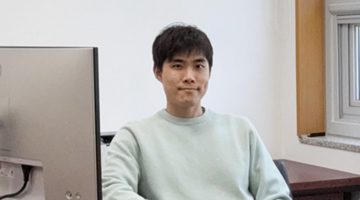
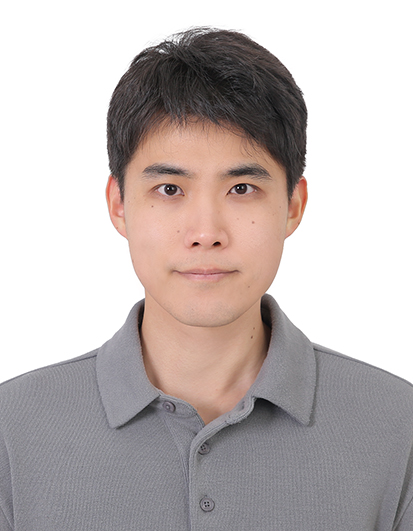
Hello, I’m Kang Iksung, and I joined the School of Electrical Engineering this past January. Within the Signal division, I lead research on intelligent computational imaging systems.
Q2. As a new faculty member setting up your own lab, what kind of students would you like to work with? What challenging projects will students joining the newly opened Kang Imaging Group take on?
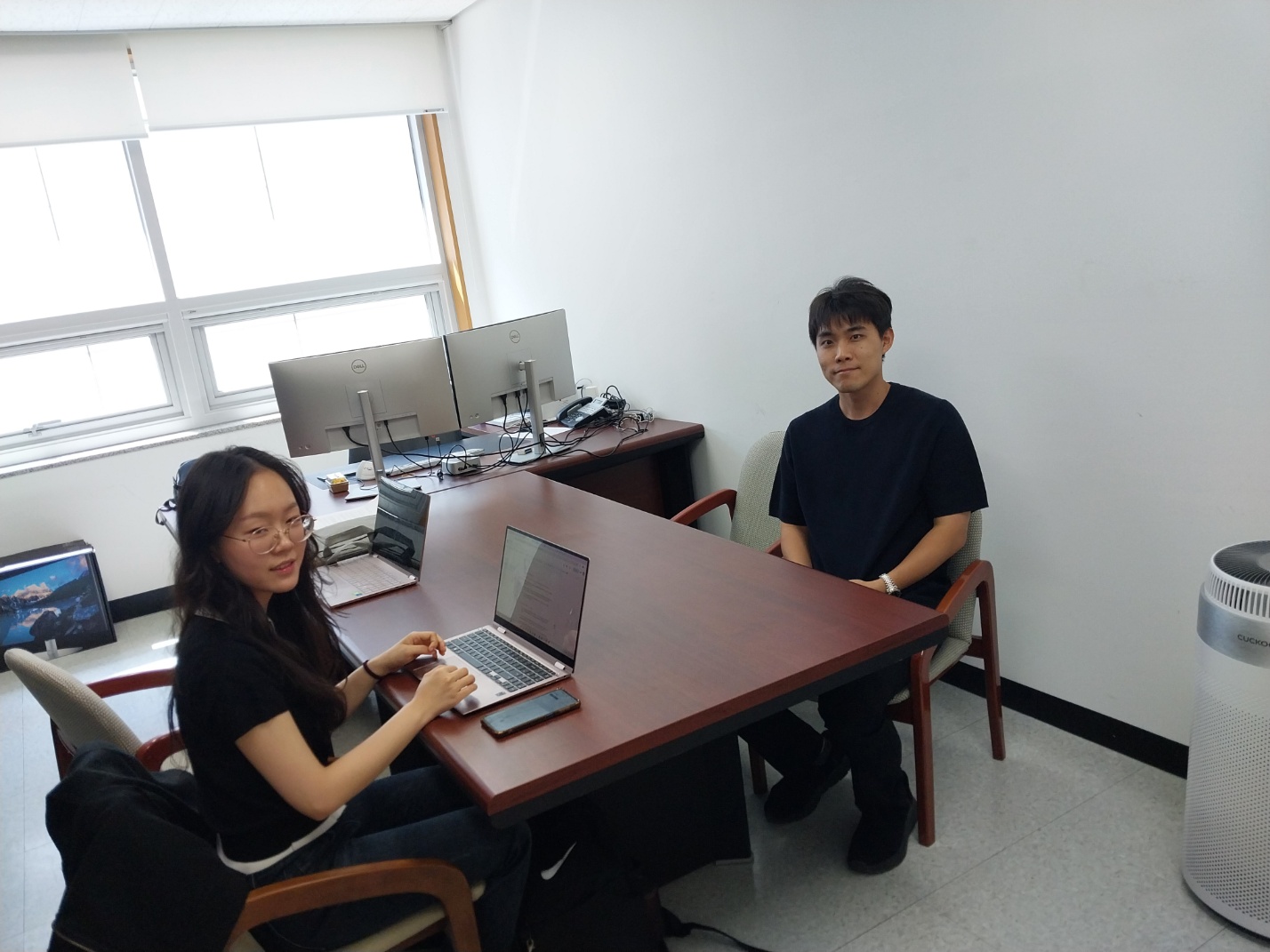
Our lab fundamentally conducts research that integrates hardware and software. On the hardware side, we mainly work with optical imaging, which requires the ability to build optical systems such as microscopes. On the software side, we build on machine learning and AI, but our goal is to bring the increasingly prominent concept of ‘physical AI’ into microscope-based optical systems. In other words, rather than having AI simply post-process images, we aim to implement an integrated framework that makes the imaging system itself intelligent. As application areas, we plan to explore brain science and biological tissue imaging, as well as 3D semiconductor nanoimaging.
<Section 2> Fundamental Competencies for Undergraduates & Mentoring Philosophy
Q1. Imaging system research seems to require a broad background in optics, physics, deep learning, and more. What do you consider the most essential foundational competencies for undergraduates?
The scope is quite broad, but if I had to name specific courses, Signals and Systems, Probability and Basic Stochastic Processes, and Electromagnetics would be the three most important. Since optics is a discipline built on electromagnetics, having a solid grasp of the underlying electromagnetic theory is essential. In addition, an introductory course in optical engineering would also be very helpful. I’ve opened a special lecture myself that covers everything from fundamentals to applications broadly enough that even second-year students can participate. Building a solid foundation through courses spanning signals and waves will be a great asset for research.
Q2. What values do you consider most important when mentoring students, and do you have your own particular mentoring style?
Momentary flashes of insight matter, but I think a diligent, persistent attitude matters more. Both master’s and PhD programs are long journeys, so studying a topic in depth requires the perseverance to keep working steadily. I also think it’s best to be honest with yourself about what you do and don’t know. When discussing research, out of a desire to show how much you’ve studied, people sometimes gloss over the parts they only vaguely understand. In that case, you may later struggle to participate fully or find your insight limited, so I think it’s better not to be afraid, to quickly resolve what you don’t understand, and then join the discussion so it can move in a more productive direction.
<Section 3> Deeper Dive into Research (NeAT, Design Philosophy, Academic Background)
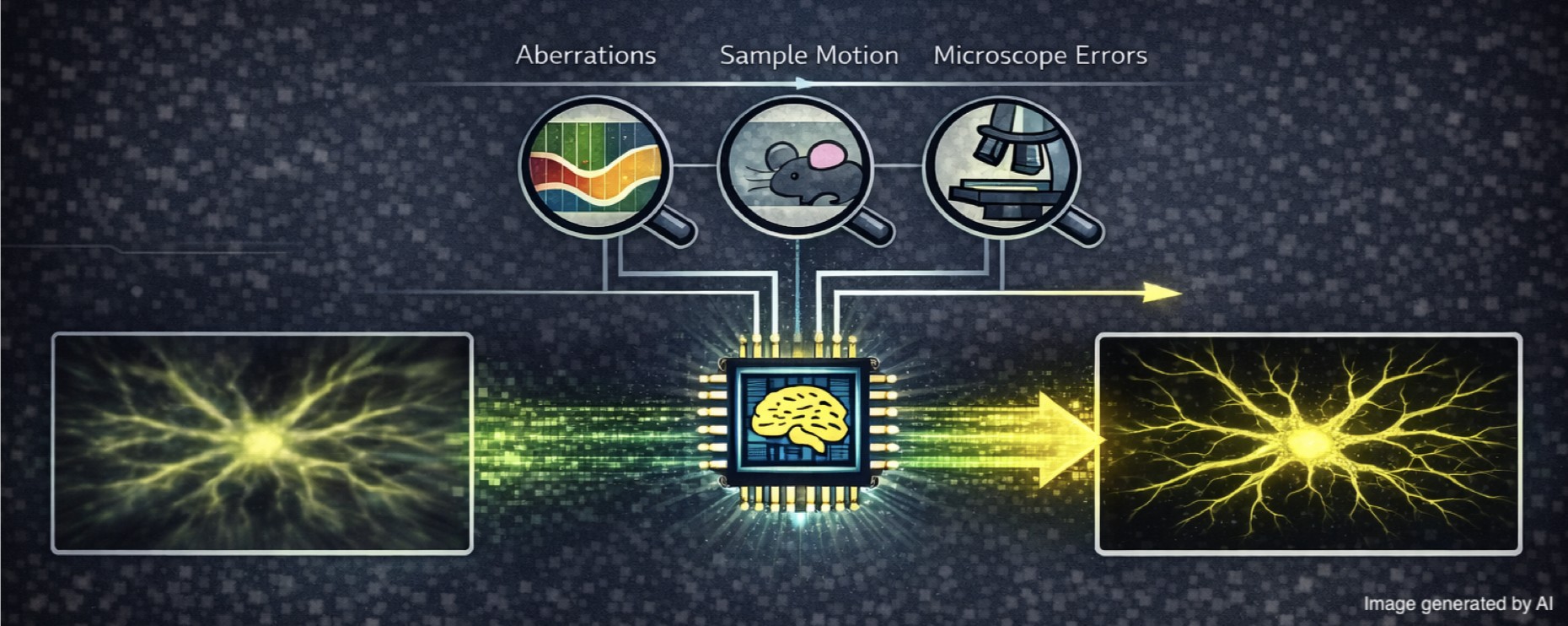

Q1. Your recent NeAT framework research published in Nature Methods was impressive. Could you explain, at a level accessible to students, how you overcame the limitations of existing imaging technologies and the core principles behind it?
This is research applied to imaging biological tissue. Just as it’s hard to see an object clearly in the deep sea due to floating particles or wavefront distortion, light also gets distorted—causing aberrations—when observing deep tissue under a microscope. Correcting for this previously required expensive hardware equipment, which was difficult to adopt in an ordinary lab unless an optics expert was on hand. We aimed to address this problem by substituting AI for the hardware, increasing accessibility and lowering the barrier to biological microscopy research.
Q2. Intelligent imaging systems closely connect physical laws and computer algorithms. In fusing these two domains, what design philosophy do you consider most important?
Above all, I think the key is to deeply understand the imaging process itself. Imaging is ultimately a process in which light and an object interact to produce a signal. To properly implement this, you need to fully understand the sample’s characteristics, the physical properties of light, and the interaction model between the two. It’s important not only to make use of existing models but also to be able to adapt them to fit our specific application purposes. Building on this optical and mathematical foundation, organically integrating machine learning AI algorithms optimized for each application is the core direction of our research.
Q3. How did your research experience at MIT and UC Berkeley influence the research direction of the Kang Imaging Group you now lead at KAIST?
I was first introduced to optical imaging and machine learning at MIT. After joining an optics lab as an undergraduate, COVID hit and it became impossible to run experiments in the lab. So at the time, I thought about using the then-emerging field of deep learning to process the images we already had, and in doing so I discovered that deep learning could also be introduced into the field of computational imaging.
Meanwhile, I had long been interested in the brain as a system, and I worked in parallel on MRI research and circuit research. To explore the underlying mechanisms of the brain, I needed a tool like optics that could see down to a small scale, and after building that capability at MIT, I moved to a brain science lab at Berkeley. There was some skepticism at first, but I directly persuaded the professor and worked to formulate research questions related to brain science.
<Section 4> Career Advice & Closing Message
Q1. When your research stalls or you hit a technical wall, how do you typically find a way through?
Talking honestly with my advisor was the most effective approach. In the early years of graduate school, the combination of the language barrier and impatience made it hard to open up about difficulties. Korean students in particular tend to find their advisors intimidating, so they often try to report only good results and are reluctant to reveal their struggles. But when I mustered the courage to speak up, my advisor told me I could talk to him anytime. An advisor’s role is to help students grow into independent researchers. When difficulties arise, quickly sharing them and asking for advice is, in the end, the fastest path forward.
Q2. If you could go back to your twenties as a university student, is there anything—outside of research—that you’d tell yourself ‘you must try this’?
Looking back, my biggest regret is that, being so focused on grades, I avoided challenging courses. KAIST has excellent professors and many fascinating courses. Designing your curriculum boldly—that’s the advice I’d most like to give.
Q3. How do you envision your research concretely contributing to everyday life in the future—medical diagnostics, semiconductor inspection, and so on?
There’s a strong perception that imaging systems are only used in labs or companies. But my goal is to increase accessibility without sacrificing performance. For example, accurately diagnosing remaining battery life or non-destructively checking food freshness could become possible if backed by high-resolution imaging technology. Ultimately, I want to contribute as an enabling technology so that cutting-edge fields such as brain science, disease research, and semiconductor design can advance more easily.
Q4. As the new semester begins and students in the School of Electrical Engineering dream new dreams, could you offer a word of encouragement?
Since you’ve come this far carrying big dreams, don’t be afraid—challenge yourself with a variety of experiences. As time passes and you get older, trying new things becomes increasingly difficult. Now is precisely the time—the privilege of youth—when you can try many things and discover what you truly want.
Chanwoo Kim, EE Newsletter Reporter — cardano128@kaist.ac.kr
Hyolyn Kim, EE Newsletter Reporter — kaistlyn@kaist.ac.kr
This interview was originally conducted in Korean. It has been translated into English, with some expressions lightly adapted for readability.
<Section 1> Research Overview
Q1. Could you briefly introduce yourself?
Hello. I am Jimin Kwon, and I joined the School of Electrical Engineering at KAIST on April 1 of this year.
I am a faculty member in the School of Electrical Engineering and also hold a joint appointment in the Department of AI Systems. I completed my bachelor’s, master’s, and doctoral studies at POSTECH. During my master’s program, I studied custom IC design, including RFIC and analog circuit design. During my doctoral program, I shifted my focus to semiconductor processes and materials. I then worked as a postdoctoral researcher on semiconductor materials in the Department of Chemical Engineering at POSTECH, followed by two years of postdoctoral research at Stanford University. After serving on the faculty at UNIST for approximately three years and eight months, I joined KAIST.
Q2. Could you explain your research areas in a way that undergraduate students can easily understand?
Our research can be broadly divided into 3D IC technology and semiconductor packaging technology. First, 3D IC technology involves vertically stacking and connecting semiconductor devices or circuits with different functions to create a single high-performance system. We develop and fabricate devices in this area while also using modeling and simulation to predict their performance when incorporated into actual integrated circuits. 3D IC research can be broadly divided into logic devices, which perform computation, and memory devices, which handle data. Our laboratory works on both areas, connecting device-level fabrication and design with IC-level performance prediction. Put simply, we do not stop at creating new semiconductor devices; we also analyze how those devices would affect the performance of an entire system when integrated into a chip.
Our second research area is semiconductor packaging. In the past, packaging primarily protected finished chips and connected them to external components. Today, advanced packaging has become a core technology that enables multiple chips to operate as a single system. To realize such multi-chip systems, our laboratory studies foundational technologies such as chip-to-chip bonding and the design, fabrication, and validation of substrate structures. We also conduct research on RF device packaging. RF devices operate at very high frequencies, and we study how to embed them in substrates and how to design and fabricate the passive components required for their operation. Our goal is to develop packaging technologies and system structures that deliver better performance at high frequencies.
Ultimately, our laboratory aims to realize new semiconductor systems in which multiple chips are efficiently connected and operated on a single substrate. Rather than limiting our work to individual devices or packages, we study the system-level benefits that emerge when multiple chips are combined, as well as the architectures best suited to such systems. Going forward, we plan to expand our research toward building complete multi-chip systems by mounting chips that we design onto substrates that we fabricate ourselves.
Q3. What differentiates your current research from conventional semiconductor research, and what new approaches does it introduce?
In 3D IC research, our distinguishing feature is that we explore new system configurations that are difficult to realize using silicon alone. Whereas conventional research has largely focused on developing silicon ICs, we investigate how emerging materials—including oxide semiconductors, two-dimensional materials, and carbon nanotubes—can be implemented as logic or memory devices and what system-level benefits they can provide when three-dimensionally integrated with silicon devices. Our approach therefore differs in that we co-design new materials, devices, and three-dimensional structures.
3D ICs are important because they can overcome interconnection limits found in conventional 2D structures. When memory and logic exist on separate chips, they must be connected through a substrate. The limited number of input/output terminals, or I/Os, can then become a system performance bottleneck. In a 3D IC, by contrast, logic and memory can be connected vertically inside the chip through vias—microscopic conductive paths that electrically connect different layers—measuring only tens of nanometers across. This allows far more connections, improves data-movement efficiency, and alleviates the memory bottleneck, in which insufficient memory bandwidth delays computation. This issue has become especially important in AI systems, including large language models, because their performance ultimately depends heavily on how much data they can retrieve and how quickly they can retrieve it. Increasing the connectivity between memory and logic through 3D IC technology can therefore make a significant contribution to improving AI system performance.
In packaging, we are also proposing structures that differ from conventional approaches. Beyond simply stacking chips on a substrate, we are investigating structures in which chips are mounted vertically, as well as new substrate structures that are advantageous for high-speed signal transmission.
In summary, our research combines new materials, devices, three-dimensional integration, and advanced packaging technologies to improve overall system performance.
Q4. What is the greatest technical bottleneck you currently face, and how are you approaching it?
The greatest technical bottleneck in 3D IC research is that multiple interdependent problems arise at the same time. A new semiconductor technology cannot be completed simply by identifying a promising material or developing a single process. Three-dimensional device integration requires the simultaneous development of processes, materials, device structures, circuit designs, and simulation environments. Even after a new device has been fabricated, an appropriate design environment is needed to build an actual circuit around it. In semiconductor design, this environment is called a process design kit, or PDK. When developing a new technology, however, the appropriate design rules and models are often not yet clearly established. Device technology and circuit design must therefore be optimized together. This approach is known as design-technology co-optimization, or DTCO.
The situation is similar in packaging research. A multi-chip module cannot be completed simply by fabricating a substrate or designing signal traces. Researchers must jointly consider how the chips will be bonded, which processes will be applied, what design constraints will arise, and how those constraints can be overcome. In packaging, this approach is called system-technology co-optimization, or STCO.
In this way, 3D IC and advanced packaging research involve a complex combination of processes, design, devices, and systems. Our laboratory therefore places great importance on interdisciplinary collaboration. Students naturally share their respective expertise, and many student-led meetings take place voluntarily. I also speak with students frequently and strive to run the laboratory in a way that enables researchers with different backgrounds to solve problems together.
In the long term, I believe that integrating AI into the research process will also be important. For problems this complex, rather than expecting a single AI system to solve everything, we will need AI agents specialized in individual domains such as processes, devices, design, and packaging. The ability of specialized AI agents and human researchers to collaborate in solving problems will become increasingly important. Although we have not yet reached the stage of implementing this vision in a concrete way, using human–AI collaboration to address complex semiconductor system challenges is one of our laboratory’s long-term goals.
Q5. In which industries or technologies could this research be applied, and what do you hope to achieve in the long term?
Our research is closely connected to the semiconductor industry as a whole. Semiconductor performance has recently become a decisive factor in the overall performance of AI systems and high-performance computing. In that sense, our work addresses technologies that are needed today while also preparing for those that will become important to the semiconductor industry in the future. We have two main technical goals: developing 3D IC technology and developing high-performance multi-chip module packaging technology. By bringing logic and memory closer together, 3D ICs can reduce bottlenecks in data movement. Multi-chip module packaging enables several chips to operate efficiently as a single system. These technologies could be applied to fields in which data movement and processing speed are critical, including AI accelerators, high-performance computing, and next-generation memory systems.
It is difficult, however, to define a single fixed long-term goal. Semiconductor technology changes extremely quickly, and the hardware required may continue to evolve with the direction of AI development. Rather than studying the same subject for ten or twenty years, I believe it is important to keep track of technological and industrial trends and identify the most pressing problem at each point in time. Many challenges also remain before commercialization. For 3D ICs, the first priority is to develop reliable devices and processes that support three-dimensional stacking. The computational methods and simulation frameworks needed to comprehensively predict 3D IC architectures and system performance are also not yet sufficiently mature. To make an industrially persuasive case, we need clear computational results and logical evidence showing what benefits new materials and devices can actually provide. Ultimately, the long-term direction of our research is to demonstrate how new semiconductor technologies can change real systems. We hope to ensure that new materials and devices, 3D ICs, and packaging technologies do not remain isolated innovations but make practical contributions to future AI systems and the semiconductor industry.
<Section 2> Experiences as a Researcher
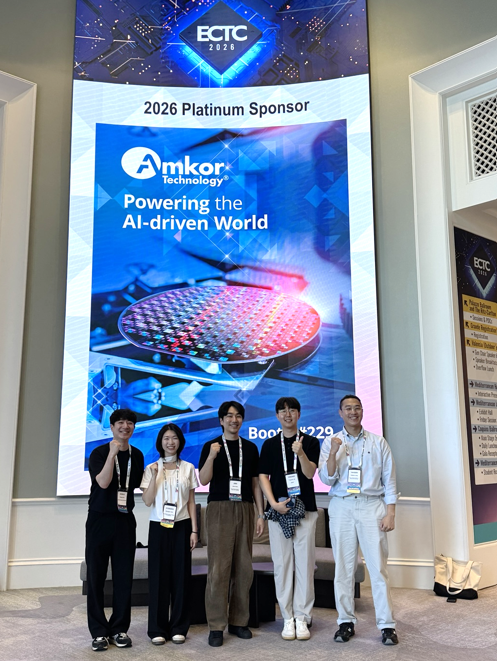
Q1. What led you to choose your research field, and how did you make career decisions from your doctoral studies to your current position? Why did you choose to become a professor, and what career might you have pursued otherwise?
It is difficult to attribute my choice of research field to a single event. I have always tried to focus on the work in front of me and give my best effort to whatever I was doing at the time. I worked in different research areas during my master’s and doctoral studies, my postdoctoral appointments, and my career as a professor. Looking back, I believe that all of those experiences are connected and have shaped my present research direction and perspective.
I like the phrase “connecting the dots,” which Steve Jobs used in his Stanford University commencement address. It conveys the idea that the individual experiences in our lives eventually connect to shape our identity and sense of self. I feel that I have gone through a similar process. Experiences gained by focusing on the work at hand accumulate into a unique background, which then becomes the foundation of each person’s own story. For that reason, I believe it is important for students to be fully engaged in their lives, whether as undergraduates or graduate students, and to make an effort to find meaning in what they are doing.
I chose academia because I saw it as a career that would allow me to decide what I wanted to study and directly show the world the insights I had developed. I have been fortunate to encounter many opportunities and choices throughout my life, and following them seems to have brought me to where I am today. I have not seriously considered what I would have done if I had not become a professor, but I think starting a business could have been interesting. Ultimately, I believe that the purpose of technological development is to improve people’s lives, so I remain open to entrepreneurship someday. Having decided to work in engineering, I likely would have pursued one of those two paths.
Q2. Having worked at several stages of an academic career, how did your research and collaboration styles change across different environments?
As an undergraduate, I worked on internet and communications research. During my master’s program, I studied RFIC and analog IC design. I then moved into semiconductor-device processing during my doctoral studies and nanoscale processing related to materials and 3D ICs as a postdoctoral researcher. Looking back, those varied research experiences formed the background for why I pursue my current work. I was happy in each environment and was fortunate to have many positive experiences at every stage. That is why I am also very excited about my future at KAIST.
What changed most across environments was the research culture and style of collaboration. KAIST offers many opportunities to interact with faculty members from different areas. UNIST has many young researchers and a highly forward-looking atmosphere that makes it an excellent place to focus on research. At Stanford, I was particularly impressed by the culture of respect for diversity. People did not judge others hastily, and relationships between professors and students were relatively egalitarian. It was also striking that researchers had confidence that their work could change the world. Finally, POSTECH holds deep personal meaning for me because I spent so many years there. Its relatively small student body created a close-knit atmosphere in which I could have a wide variety of experiences.
Q3. Have you encountered difficulties within or beyond your research? How did you overcome them and find a way forward?
Overcoming hardship is difficult for everyone, but ultimately, sometimes you simply have to grit your teeth and push through. As experiences accumulate, you come to realize how important it is to trust yourself and protect your sense of self. Rather than allowing a challenge to consume me, I tried to step back and view myself separately from the difficulty I was facing.
I also believe that the experience of solving small problems one at a time is extremely important. As you work through problems step by step, you build trust in yourself. Eventually, difficulties that once seemed overwhelming begin to feel different and more manageable.
Q4. Students increasingly use AI for studying and research. What are your thoughts on this trend?
Ultimately, I believe every problem comes down to asking a good question. If you can formulate the right question, the path through a difficulty often becomes clearer. The most important quality when using AI is therefore an active, self-directed attitude. You should continually ask yourself what you need, what you want to understand, and how you want to grow.
This is especially important in academic study. Rather than simply completing an assigned task as if it were homework, you need to think deeply about what you genuinely want to understand. If you continue asking your own questions and searching for answers, meaningful growth will eventually follow, even if nobody recognizes it immediately.
When studying foundational subjects in electrical engineering, undergraduates may wonder what those courses have to do with their lives. Once you begin conducting research, however, you naturally realize how essential that foundational knowledge is to understanding and solving real problems. From that perspective, I hope undergraduates will try research somewhat earlier. Research provides a valuable opportunity to consider why you are studying and how you want to grow.
Q5. Of the achievements you have made throughout your research career, which moments were most rewarding or memorable? What research attitudes or approaches helped you achieve them?
There have been many moments for which I am grateful, including receiving an award at graduation, carrying out meaningful research projects, and being appointed to the faculty at KAIST. Personally, however, I feel the greatest reward when something good happens to a student who has worked with me.
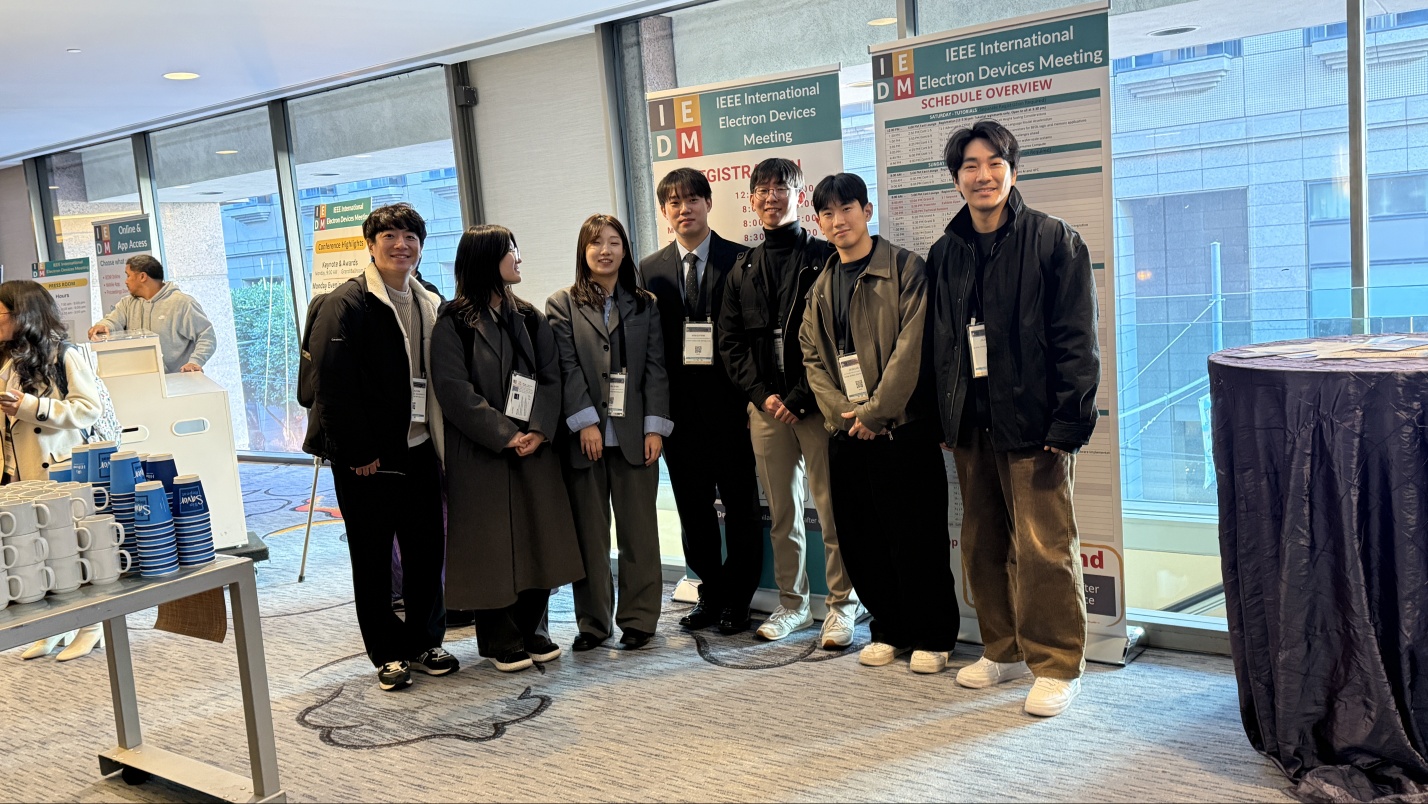
One particularly memorable moment was watching a student from my laboratory present at a major conference such as the IEEE International Electron Devices Meeting (IEDM). Seeing the student present a result that we had worked hard to achieve together was deeply moving.
In the end, what matters most to me is seeing people thrive. I feel the greatest sense of fulfillment when students or postdoctoral researchers with whom I have worked become professors or continue to grow and succeed in their respective fields.
<Section 3> A Message to Readers
Q1. Are there any courses that prospective undergraduate or graduate researchers should take, or any qualities you particularly value when selecting students?
Because our laboratory primarily studies semiconductors, courses related to semiconductor devices, circuit design, and systems are helpful. I also value students with diverse experiences. Our laboratory brings together research from many fields, so it is important for students to find the subject they want to pursue within that environment. Studying subjects related to one’s own interests in depth can therefore be highly beneficial.
Research often brings more difficult moments than expected, so it is also important to enjoy laboratory life and maintain a positive attitude when confronting challenges.
Q2. What experiences would you recommend to undergraduate students?
I would encourage undergraduates to travel widely and experience research at least once. Fewer students than we might think have the opportunity to study and conduct research in an environment as strong as the one available here in Korea. I hope students will actively make use of the opportunities and resources around them, learn through a wide range of experiences, and fully enjoy their student years.
Q3. What qualities will researchers need in an AI-driven era of rapid change?
Ultimately, it is important to remain a thinking human being. We need the habit of asking questions and the patience to stay with a single question and think it through over time. We must also take personal responsibility for our judgments and direction. Coexistence with AI is unavoidable. Therefore, rather than merely consuming AI as a tool, we should learn to collaborate with it while pursuing ambitious work that others have not been able to accomplish.
It is also important to maintain your own center instead of being swept away by technology or temptation. Even when using technology, you must consider what meaning and direction it brings to your life. We are more easily carried along by prevailing currents than we realize. We should continually ask whether we are truly living on our own terms and avoid surrendering agency over our lives. In the spirit of Nietzsche, I believe that the determination to lead one’s own life will become even more important in the future.
Q4. Finally, is there anything you would like to say to electrical engineering students?
I hope you will look after the people around you, find happiness together, refuse to give up in the face of hardship, and preserve the individuality that makes you who you are.
Chaehun Mun, EE Newsletter Reporter — horn0122@kaist.ac.kr
Jiho Seo, EE Newsletter Reporter — ghwltj3@kaist.ac.kr