This interview was originally conducted in Korean. It has been translated into English, with some expressions lightly adapted for readability.
<Section 1> Introduction & Lab Overview
Q1. Please give us a brief self-introduction.
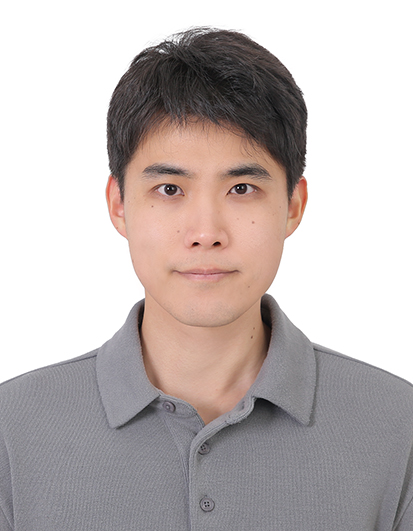
Hello, I’m Kang Iksung, and I joined the School of Electrical Engineering this past January. Within the Signal division, I lead research on intelligent computational imaging systems.
Q2. As a new faculty member setting up your own lab, what kind of students would you like to work with? What challenging projects will students joining the newly opened Kang Imaging Group take on?
Our lab fundamentally conducts research that integrates hardware and software. On the hardware side, we mainly work with optical imaging, which requires the ability to build optical systems such as microscopes. On the software side, we build on machine learning and AI, but our goal is to bring the increasingly prominent concept of ‘physical AI’ into microscope-based optical systems. In other words, rather than having AI simply post-process images, we aim to implement an integrated framework that makes the imaging system itself intelligent. As application areas, we plan to explore brain science and biological tissue imaging, as well as 3D semiconductor nanoimaging.
<Section 2> Fundamental Competencies for Undergraduates & Mentoring Philosophy
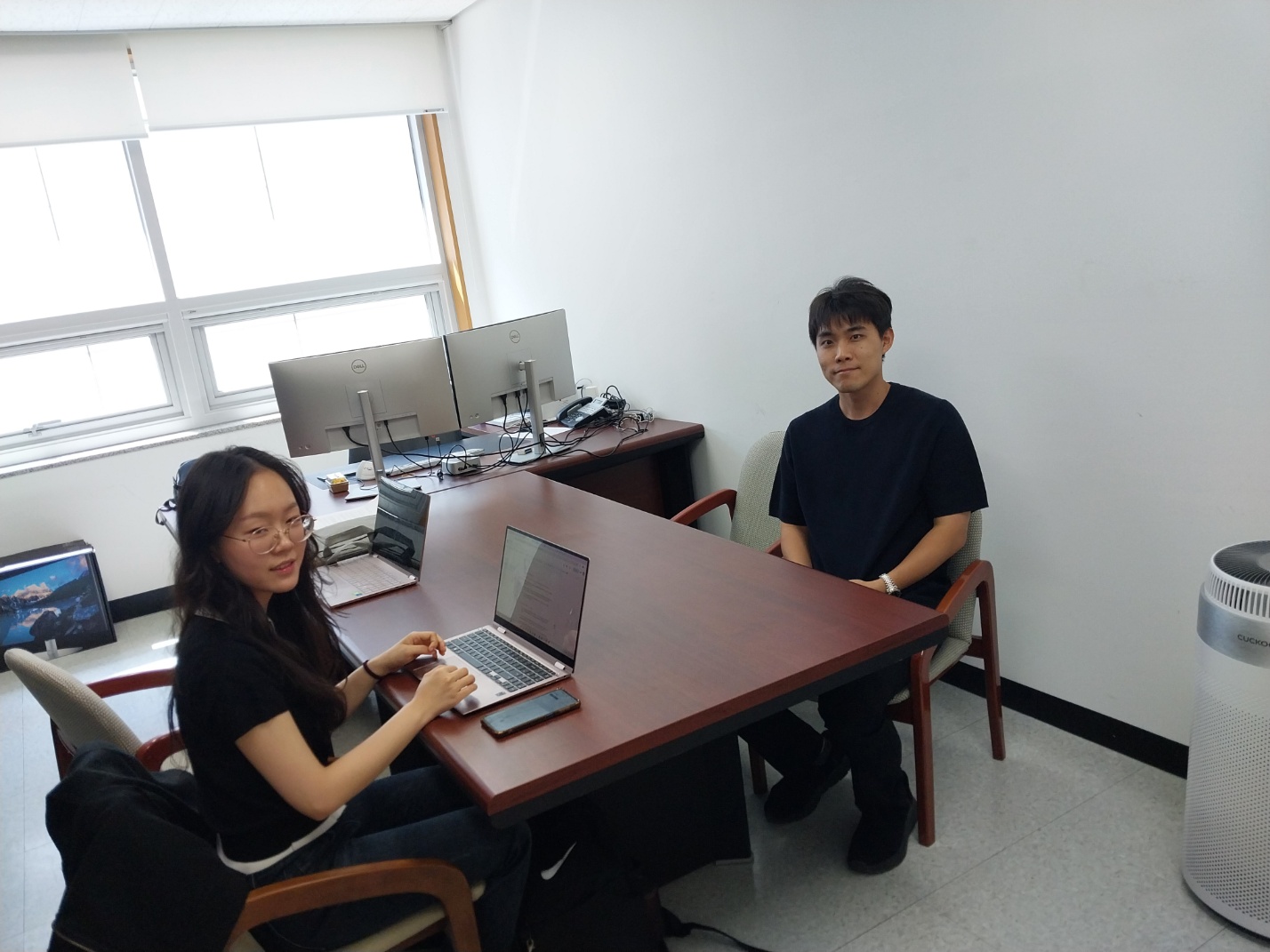
Q1. Imaging system research seems to require a broad background in optics, physics, deep learning, and more. What do you consider the most essential foundational competencies for undergraduates?
The scope is quite broad, but if I had to name specific courses, Signals and Systems, Probability and Basic Stochastic Processes, and Electromagnetics would be the three most important. Since optics is a discipline built on electromagnetics, having a solid grasp of the underlying electromagnetic theory is essential. In addition, an introductory course in optical engineering would also be very helpful. I’ve opened a special lecture myself that covers everything from fundamentals to applications broadly enough that even second-year students can participate. Building a solid foundation through courses spanning signals and waves will be a great asset for research.
Q2. What values do you consider most important when mentoring students, and do you have your own particular mentoring style?
Momentary flashes of insight matter, but I think a diligent, persistent attitude matters more. Both master’s and PhD programs are long journeys, so studying a topic in depth requires the perseverance to keep working steadily. I also think it’s best to be honest with yourself about what you do and don’t know. When discussing research, out of a desire to show how much you’ve studied, people sometimes gloss over the parts they only vaguely understand. In that case, you may later struggle to participate fully or find your insight limited, so I think it’s better not to be afraid, to quickly resolve what you don’t understand, and then join the discussion so it can move in a more productive direction.
<Section 3> Deeper Dive into Research (NeAT, Design Philosophy, Academic Background)

Q1. Your recent NeAT framework research published in Nature Methods was impressive. Could you explain, at a level accessible to students, how you overcame the limitations of existing imaging technologies and the core principles behind it?
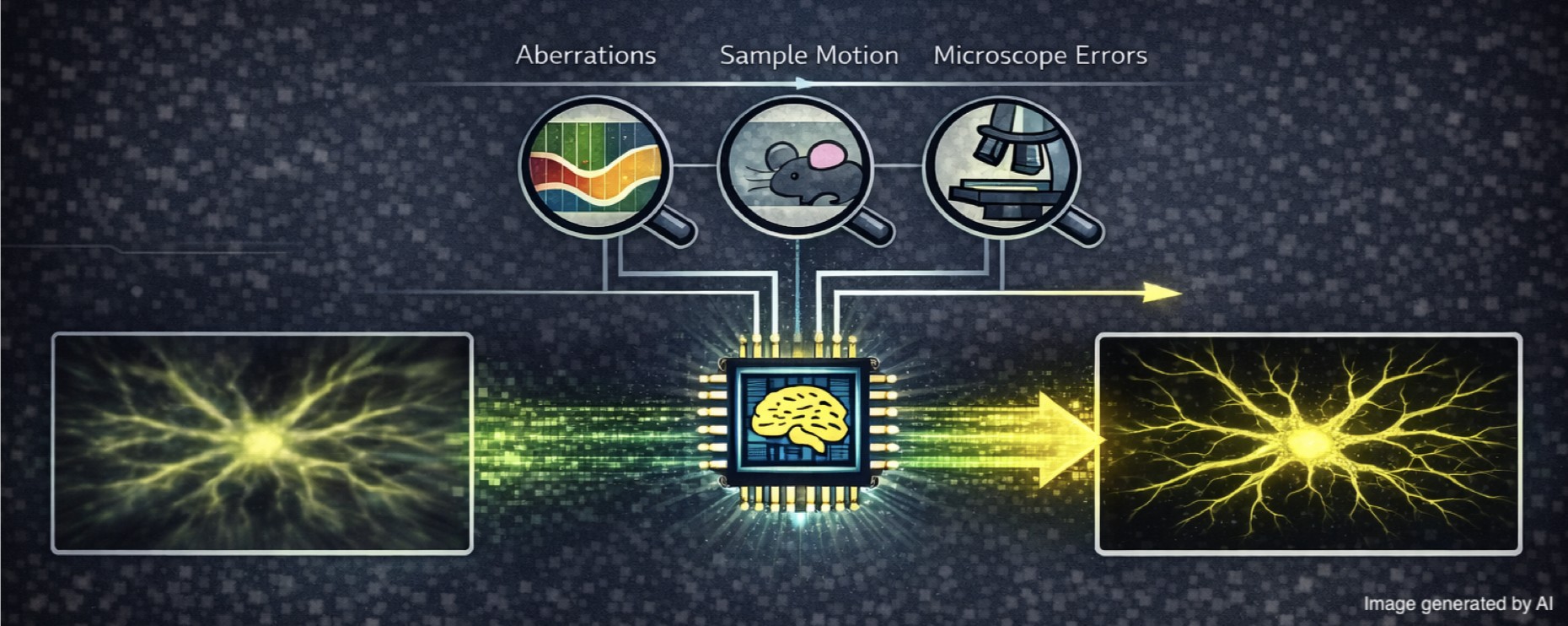
This is research applied to imaging biological tissue. Just as it’s hard to see an object clearly in the deep sea due to floating particles or wavefront distortion, light also gets distorted—causing aberrations—when observing deep tissue under a microscope. Correcting for this previously required expensive hardware equipment, which was difficult to adopt in an ordinary lab unless an optics expert was on hand. We aimed to address this problem by substituting AI for the hardware, increasing accessibility and lowering the barrier to biological microscopy research.
Q2. Intelligent imaging systems closely connect physical laws and computer algorithms. In fusing these two domains, what design philosophy do you consider most important?
Above all, I think the key is to deeply understand the imaging process itself. Imaging is ultimately a process in which light and an object interact to produce a signal. To properly implement this, you need to fully understand the sample’s characteristics, the physical properties of light, and the interaction model between the two. It’s important not only to make use of existing models but also to be able to adapt them to fit our specific application purposes. Building on this optical and mathematical foundation, organically integrating machine learning AI algorithms optimized for each application is the core direction of our research.
Q3. How did your research experience at MIT and UC Berkeley influence the research direction of the Kang Imaging Group you now lead at KAIST?
I was first introduced to optical imaging and machine learning at MIT. After joining an optics lab as an undergraduate, COVID hit and it became impossible to run experiments in the lab. So at the time, I thought about using the then-emerging field of deep learning to process the images we already had, and in doing so I discovered that deep learning could also be introduced into the field of computational imaging.
Meanwhile, I had long been interested in the brain as a system, and I worked in parallel on MRI research and circuit research. To explore the underlying mechanisms of the brain, I needed a tool like optics that could see down to a small scale, and after building that capability at MIT, I moved to a brain science lab at Berkeley. There was some skepticism at first, but I directly persuaded the professor and worked to formulate research questions related to brain science.
<Section 4> Career Advice & Closing Message
Q1. When your research stalls or you hit a technical wall, how do you typically find a way through?
Talking honestly with my advisor was the most effective approach. In the early years of graduate school, the combination of the language barrier and impatience made it hard to open up about difficulties. Korean students in particular tend to find their advisors intimidating, so they often try to report only good results and are reluctant to reveal their struggles. But when I mustered the courage to speak up, my advisor told me I could talk to him anytime. An advisor’s role is to help students grow into independent researchers. When difficulties arise, quickly sharing them and asking for advice is, in the end, the fastest path forward.
Q2. If you could go back to your twenties as a university student, is there anything—outside of research—that you’d tell yourself ‘you must try this’?
Looking back, my biggest regret is that, being so focused on grades, I avoided challenging courses. KAIST has excellent professors and many fascinating courses. Designing your curriculum boldly—that’s the advice I’d most like to give.
Q3. How do you envision your research concretely contributing to everyday life in the future—medical diagnostics, semiconductor inspection, and so on?
There’s a strong perception that imaging systems are only used in labs or companies. But my goal is to increase accessibility without sacrificing performance. For example, accurately diagnosing remaining battery life or non-destructively checking food freshness could become possible if backed by high-resolution imaging technology. Ultimately, I want to contribute as an enabling technology so that cutting-edge fields such as brain science, disease research, and semiconductor design can advance more easily.
Q4. As the new semester begins and students in the School of Electrical Engineering dream new dreams, could you offer a word of encouragement?
Since you’ve come this far carrying big dreams, don’t be afraid—challenge yourself with a variety of experiences. As time passes and you get older, trying new things becomes increasingly difficult. Now is precisely the time—the privilege of youth—when you can try many things and discover what you truly want.
Chanwoo Kim, EE Newsletter Reporter — cardano128@kaist.ac.kr
Hyolyn Kim, EE Newsletter Reporter — kaistlyn@kaist.ac.kr