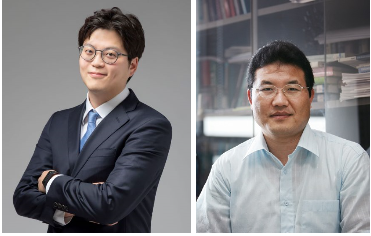
Professors Song-Min Kim & Seong-Ook Park’s research group has been selected for a research project for the 2021 Samsung Future Technology Promotion Project.
|
Research Field
|
Project Title
|
Research Director
|
|
ICT convergence creative task
|
Powerless millimeter-wave tag system for ultra-precision multi-angle object recognition
|
Professor Song-Min Kim
|
The research project proposed by professors Song-Min Kim & Seong-Ook Park’s research group has been selected for the 2021 Samsung Future Technology Promotion Project.
This project proposes an ultra-precise monitoring system using a batteryless mmWave Backscatter Tag. By attaching a small tag of several centimeters, it provides ultra-precise location recognition and various sensing functions, and it operates without power to provide precise and eco-friendly services such as monitoring patients in a coma in hospitals.
Congratulations again to the professors Song-Min Kim & Seong-Ook Park!
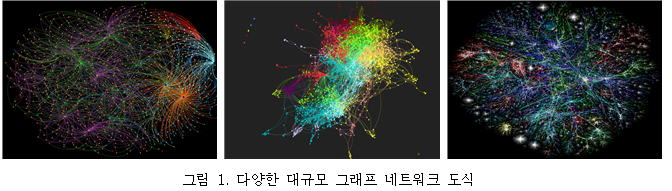
Research team of EE Prof. Myoungsoo Jung, Shinhyun Choi, Wanyeong Jung was selected as Samsung’s Future Technology development of 2021
Professors of School of Electrical Engineering Prof. Myoungsoo Jung, Shinhyun Choi, Wanyeong Jung ‘s research project was selected as Samsung’s Future Technology Development of 2021. The project covers a wide range of fields including computer architecture, AI frameworks, operating systems, circuits and devices. It is the first ICT convergence creative project with multidisciplinary project that covers device-circuit-systems in the Future Technology Development .
The details of the selected project is as follows:
|
Field
|
Project name
|
Project Manager
|
|
ICT Convergence creative project
|
Heterogeneous new memory-based hardware and system software framework for accelerating graph neural network based machine learning.
|
Myoungsoo Jung
|
The research team focuses on speeding up the popular GNN based machine learning model that uses relationship information in graph data. The project tries to solve the fundamental problems of GNNs by providing solutions from the device, circuit, architecture and operating system level.
The selection of the project is significant in that it suggests a multidisciplinary cooperation between device, circuit and computer science experts and builds a practical solution to the problem.
Samsung Elecgronics has been selecting Future Technology proejcts each year since 2014. Samsung Electronics selects vital technological projects that is necessary for the future of the country from fields of natural science, information communication technology.
Congratuations and a great thanks to the professors.
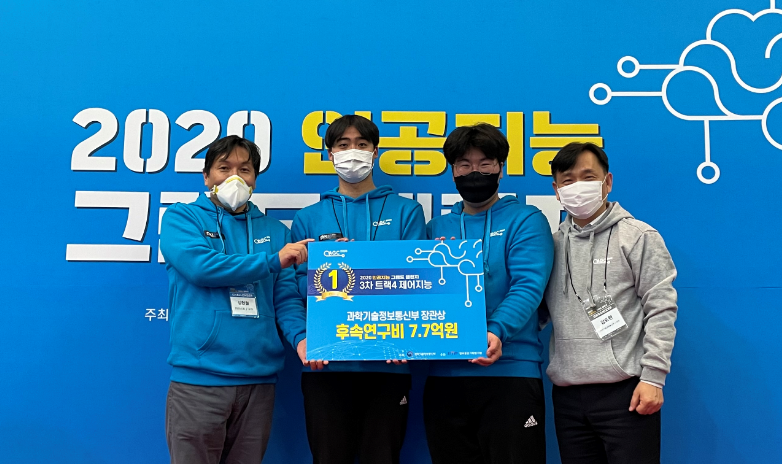
Our department’s professor Hyunchul Shim’s lab has won the MSIT AI Grand Challenge Competition Control Intelligence Part for the 2nd year in a row.
This year’s competition was based on how AI can solve various problems that will emerge from the AI based future. The challenge was to set an idea about how to use AI for responding to people’s life in various areas and social issues.
Composed of 4 major areas, professor Shim’s team applied to track 4, where a total of 5 teams applied. Professor Shim’s team used the idea of how to safely use drones to deliver supplies and goods to people.
Winning for the 2nd year in a row, Professor Shim’s team used only 100% self developed technologies (accurate positioning, high speed flight control) for the competition. Winning the competition again this year, the group will be funded a total of 2.4 billion KW which is similar to the DARPA challenge award prize. Along with the development of AI, professor Shim said that his team will further develop inside drone flight, unmanned civilian aircraft, autonomous vehicles, delivery robots and other vehicle related AI technologies.
Once again we congratulate professor Shim’s team for the reward.
_신승원 교수 연구실_2.jpg "AI in Computer division 8")
Our department’s Ph.D Candidate Seung Ho Na from professor Seungwon Shin’s lab has achieved the grand award form the 4th Financial Security paper competition.
The 4th Financial Security paper competition and financial big-data idea competition awards ceremony was held last September 2nd at the Yeouido financial security education center.
A total of 38 papers were accepted and 7 of them were selected for their excellence.
The grand award (Head of Financial Council Award) was given to Ph.D Candidate Seung Ho Na’s team with the paper titled as “Research on United Learning Techniques for Guaranteeing Privacy” which proposes an AI based security scheme.
Ph.D candidate Hyeonggwon Hong’s team from the AI Graduate school professor Junmo Kim’s lab also participated in the paper competition, and due to COVID-19 Ph.D Candidate Seung Ho Na attended the awarding ceremony as the student representative.
A total of 7 million KW was rewarded to Ph.D Candidate Seung Ho Na’s team.
We once again congratulate Ph.D Candidate Seung Ho Na for the achievement on founding a new perspective on financial security.
우리 학부 한동수 교수님 연구실 김재홍 박사과정생이 주도하여 온라인 학습 기반 고품질 라이브 비디오 스트리밍 시스템을 개발했습니다.
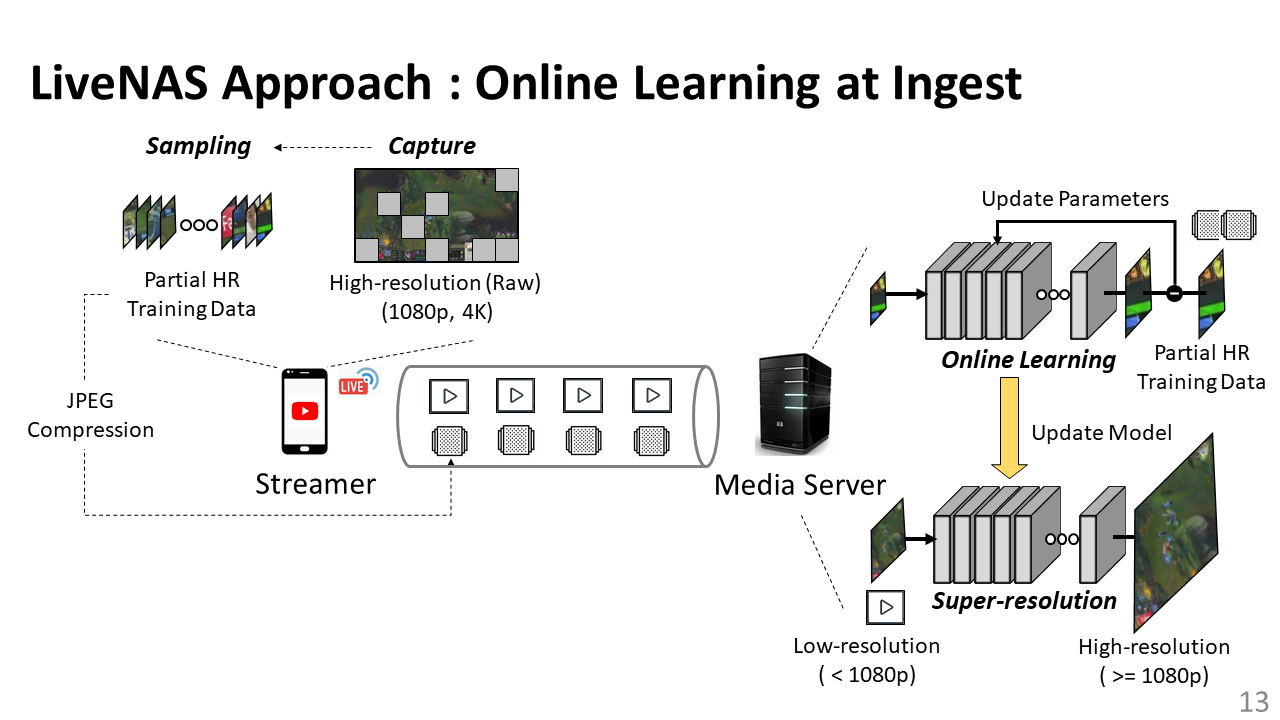
본 연구팀은 미디어 서버의 컴퓨팅 자원을 활용하여 딥러닝 기반 초해상화 기술을 통해 스트리머로부터 실시간 수집되는 라이브 비디오의 품질을 향상시켰습니다. 또한 종래의 기 학습된 신경망 모델을 새로운 라이브 비디오에 적용 시 발생하는 성능한계를 온라인 학습을 통해 개선하였습니다. 본 시스템에서는 스트리머가 고화질 라이브 비디오 프레임의 일부인 패치(patch)를 라이브 비디오와 전송 대역폭을 나누어 미디어 서버로 각각 전송하고, 서버는 수집한 패치를 이용하여 신경망 모델의 성능을 실시간 수집되는 라이브 비디오에 최적화합니다.
연구팀은 해당 기술을 이용하면 라이브 스트리밍 서비스 제공에 있어 스트리머의 전송 환경 및 단말의 성능적 제약에 대한 의존성을 낮추고, 다양한 해상도의 라이브 비디오를 분배 측의 시청자에게 제공할 수 있다고 밝혔습니다. 본 기술은 라이브 비디오 스트리밍 시스템의 사용자 QoE를 기존 대비 12-69% 향상시켰습니다.
한편, 이번 연구 성과는 Computer Networking 분야 최고학회인 ACM SIGCOMM 에 accept 되어 발표되었습니다.
자세한 연구 내용은 아래의 링크에서 확인하실 수 있습니다.
컴퓨터 디비젼 한동수 교수님의 성과에 박수를 보내드립니다.
[논문정보]
프로젝트 홈페이지: http://ina.kaist.ac.kr/~livenas/
논문 Title: Neural-Enhanced Live Streaming: Improving Live Video Ingest via Online Learning
저자: 김재홍(공동제1저자), 정영목(공동제1저자), 여현호, 예준철, 한동수(지도교수)
논문 링크: https://dl.acm.org/doi/abs/10.1145/3387514.3405856
학회 발표 영상: https://youtu.be/1giVlO6Rumg
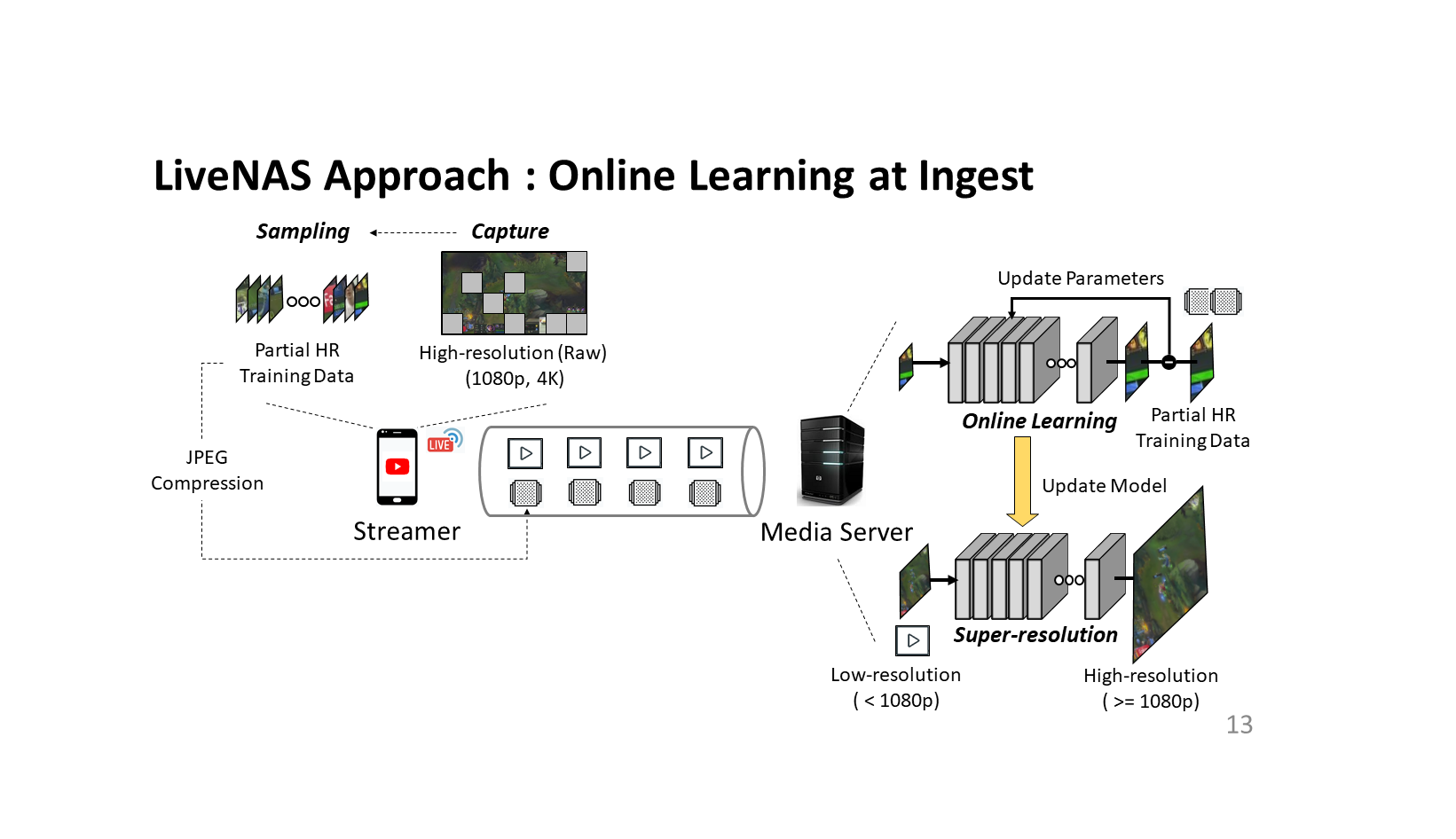
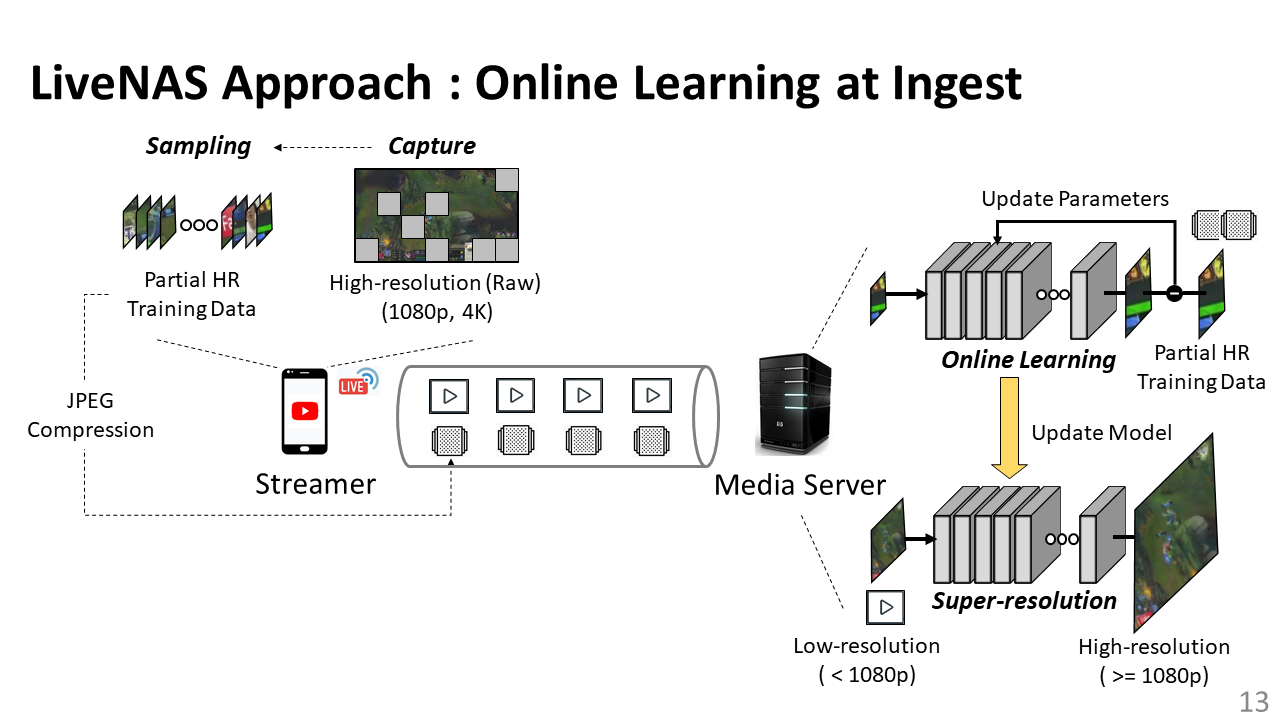
Ph.D Candidate Jaehong Kim from professor Dongsu Han’s research team has developed a high-quality live video streaming system based on online learning.
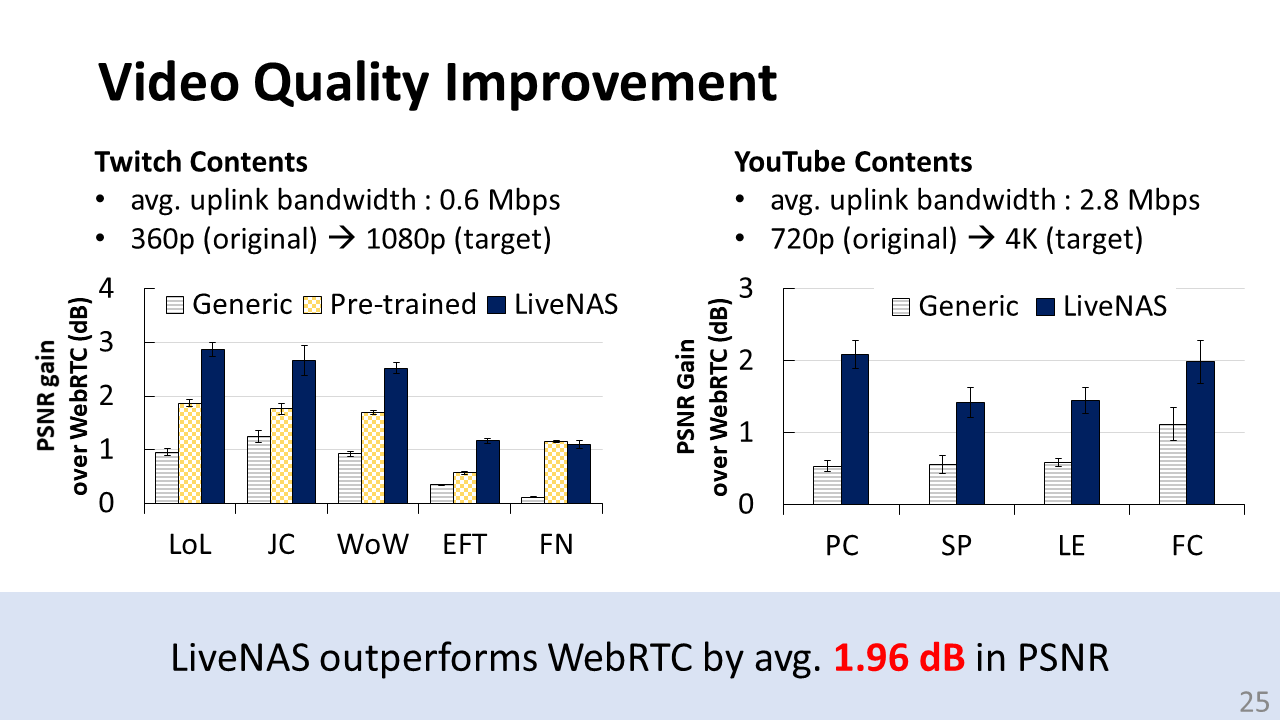
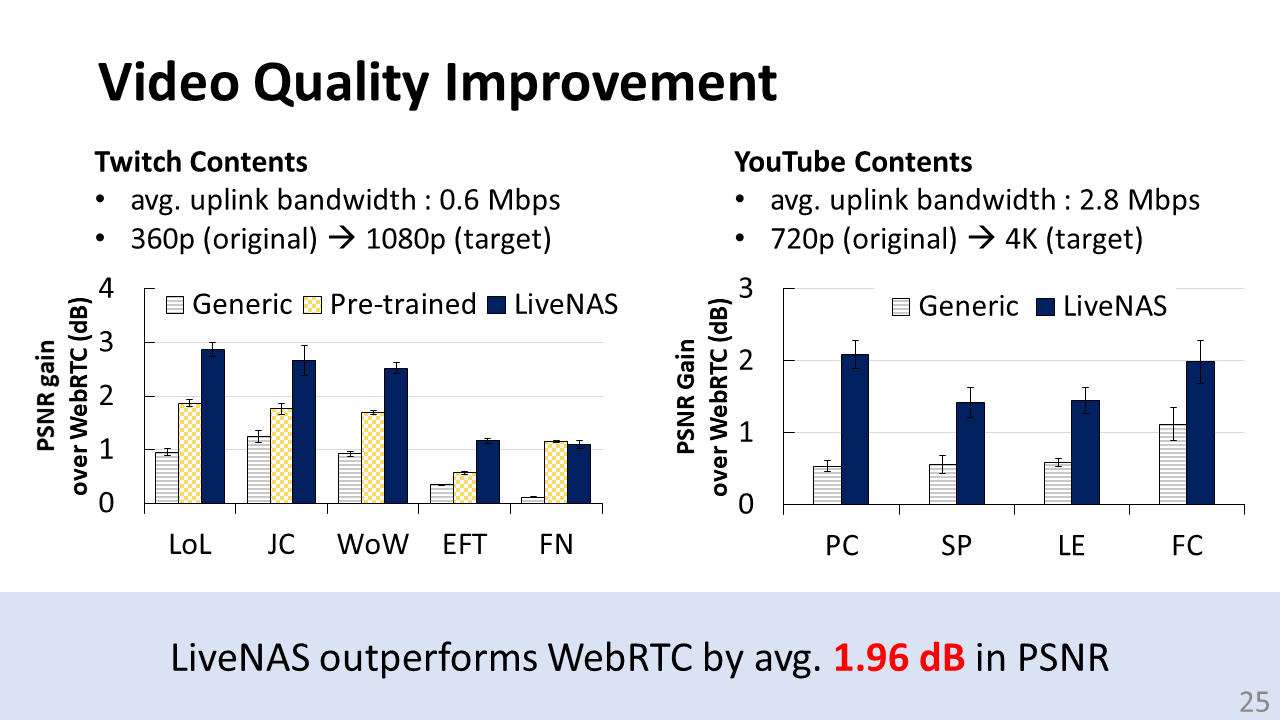
The research team improved the quality of live video collected in real time from streamers through deep-learning-based super-resolution technology using the computing resources of the media server. Furthermore, they have overcome the limitations of previous works, performance limit that occurs when applying a previously trained neural network model to a new live video, by incorporating the online learning. In this system, a streamer transmits a patch, a part of a high-definition live video frame, to the media server through a separate transmission bandwidth with the live video. Then, the server optimizes the performance of the neural network model for the live video collected in real time, using the collected patches.
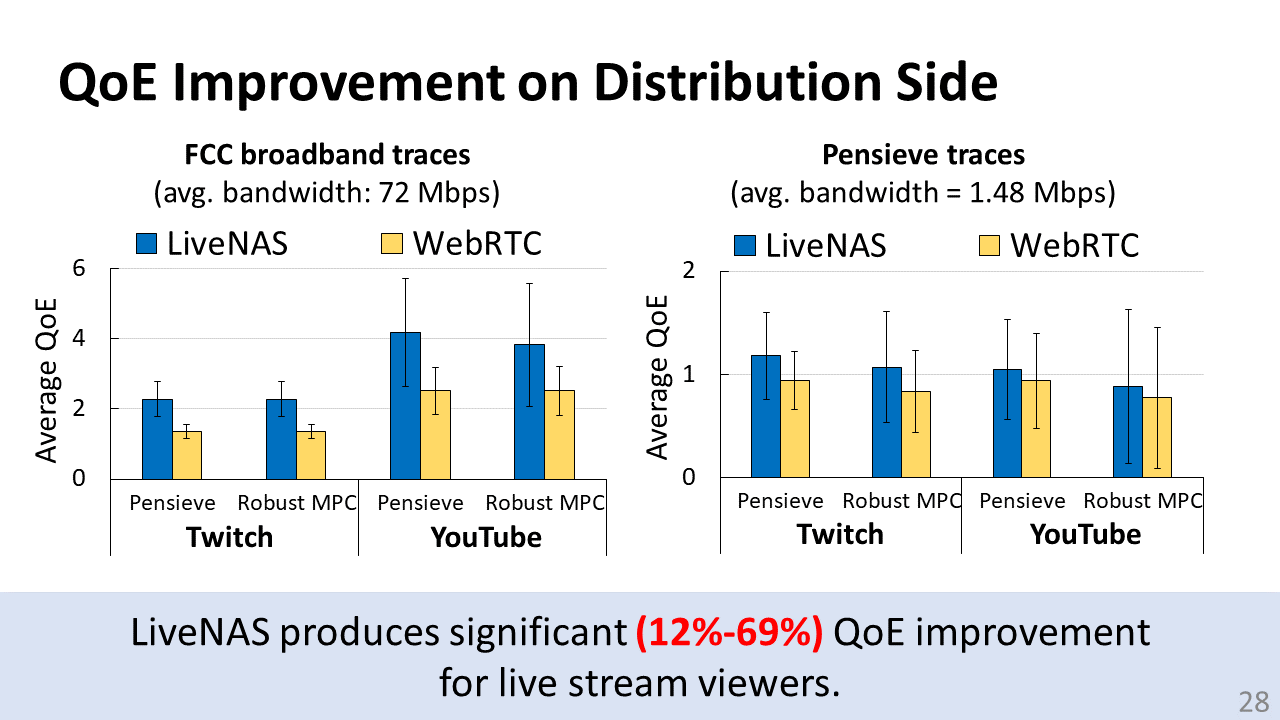
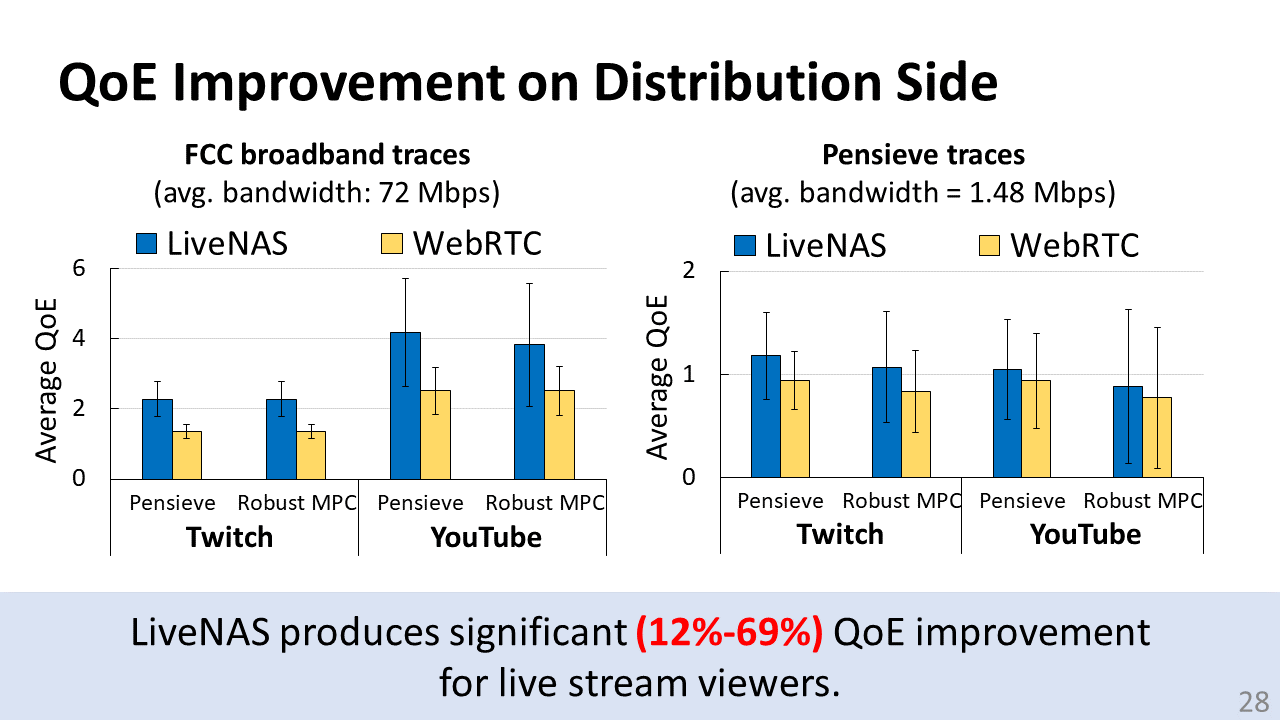
The research team reported that using this technology reduces the dependence on the streaming environment of the streamer and the performance constraints of the terminal in providing live streaming services. The technology also can provide live videos of various resolutions to the viewers of the distribution side. This technology improved user QoE of live video streaming system by 12-69% compared to the previous works.
Meanwhile, the results of this research were accepted and announced by ACM SIGCOMM, the best academic conference in the field of computer networking.
Detailed research information can be found at the link below.
Congratulations on Professor Dongsu Han’s remarkable achievement!
[Link]
Project website: http://ina.kaist.ac.kr/~livenas/
Paper Title: Neural-Enhanced Live Streaming: Improving Live Video Ingest via Online Learning
Paper link: https://dl.acm.org/doi/abs/10.1145/3387514.3405856
Conference presentation video: https://youtu.be/1giVlO6Rumg
_1.png "AI in Computer division 16")
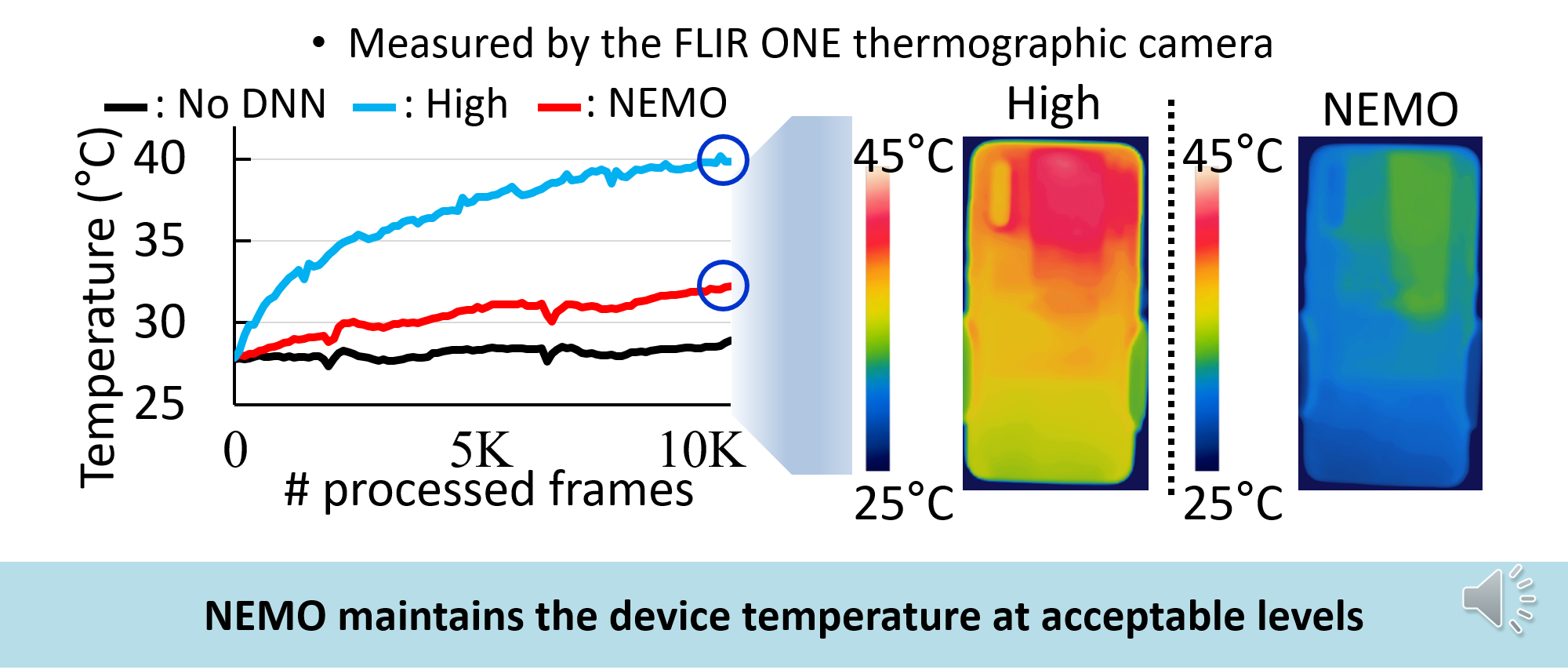
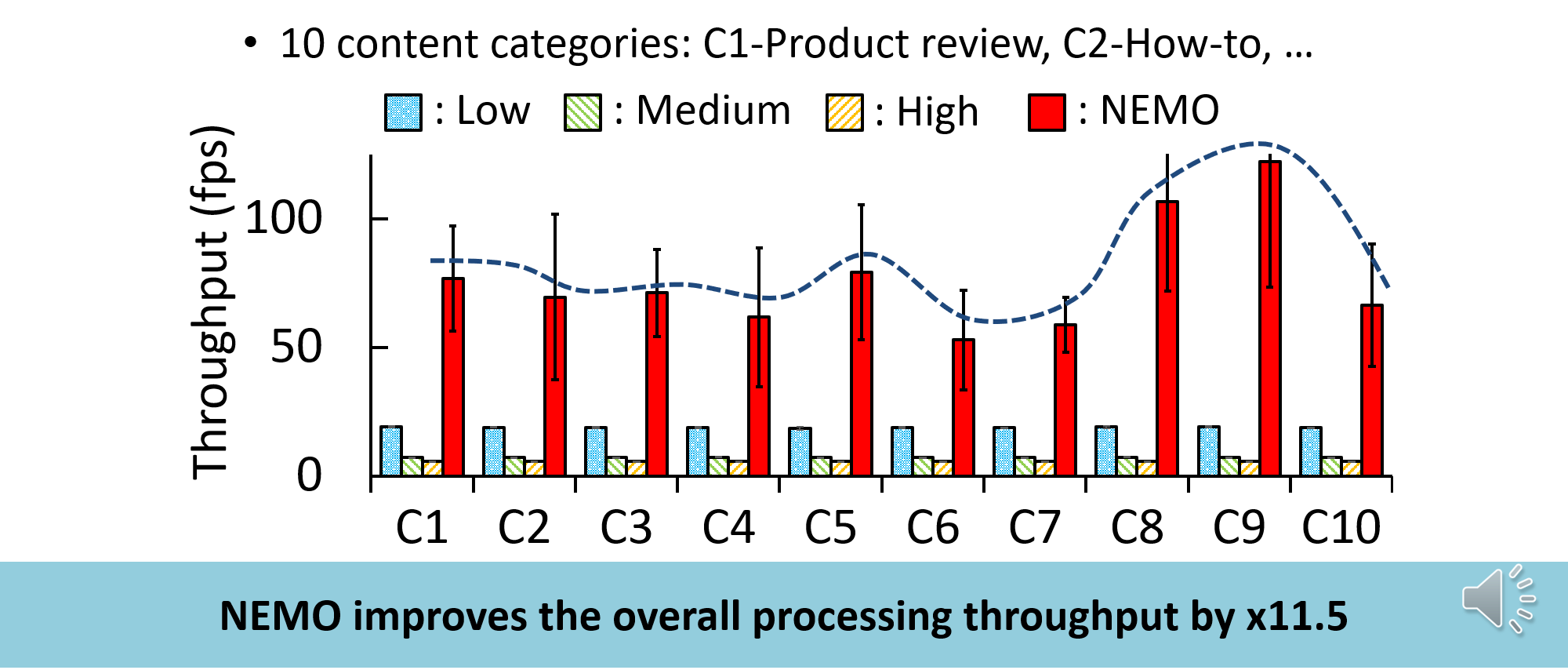
Ph.D Candidate Hyunho Yeo from professor Dongsu Han’s research team has developed a video super-resolution technology based on deep learning on commercial mobile devices.
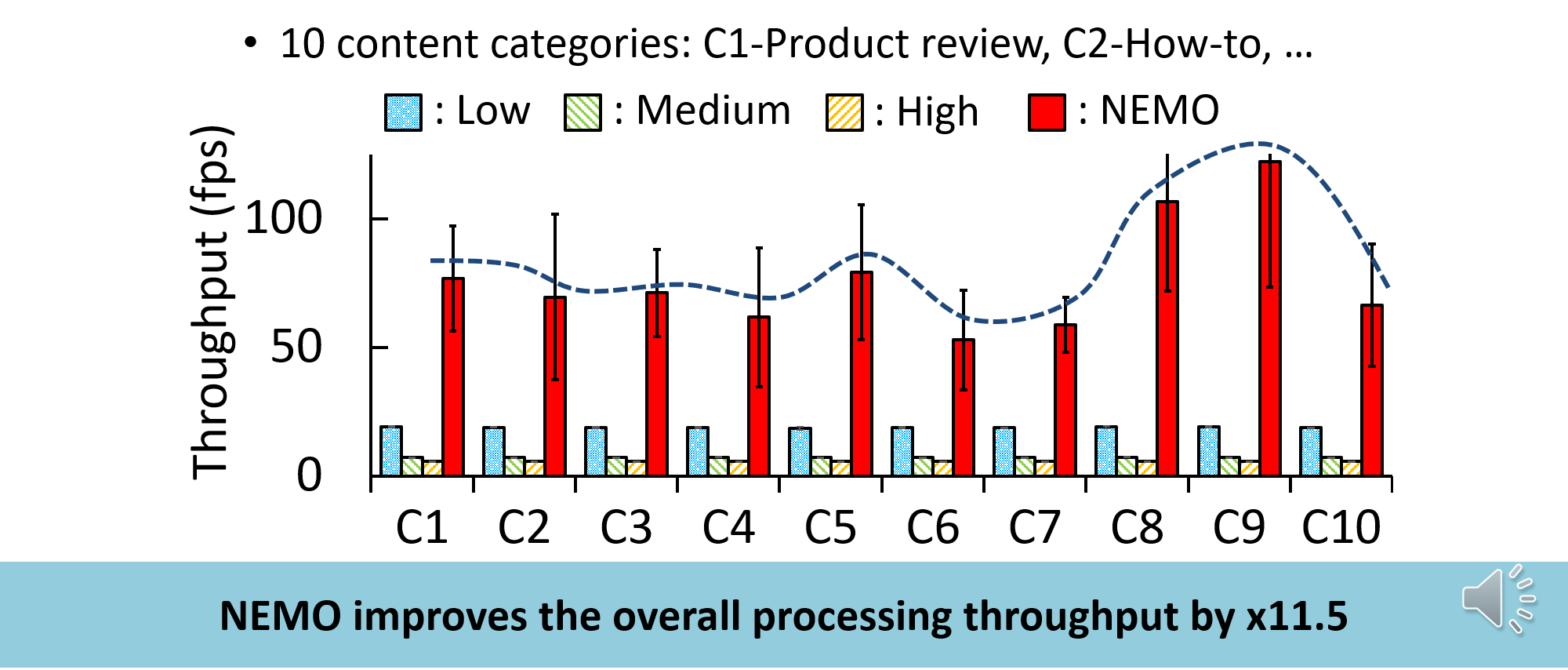
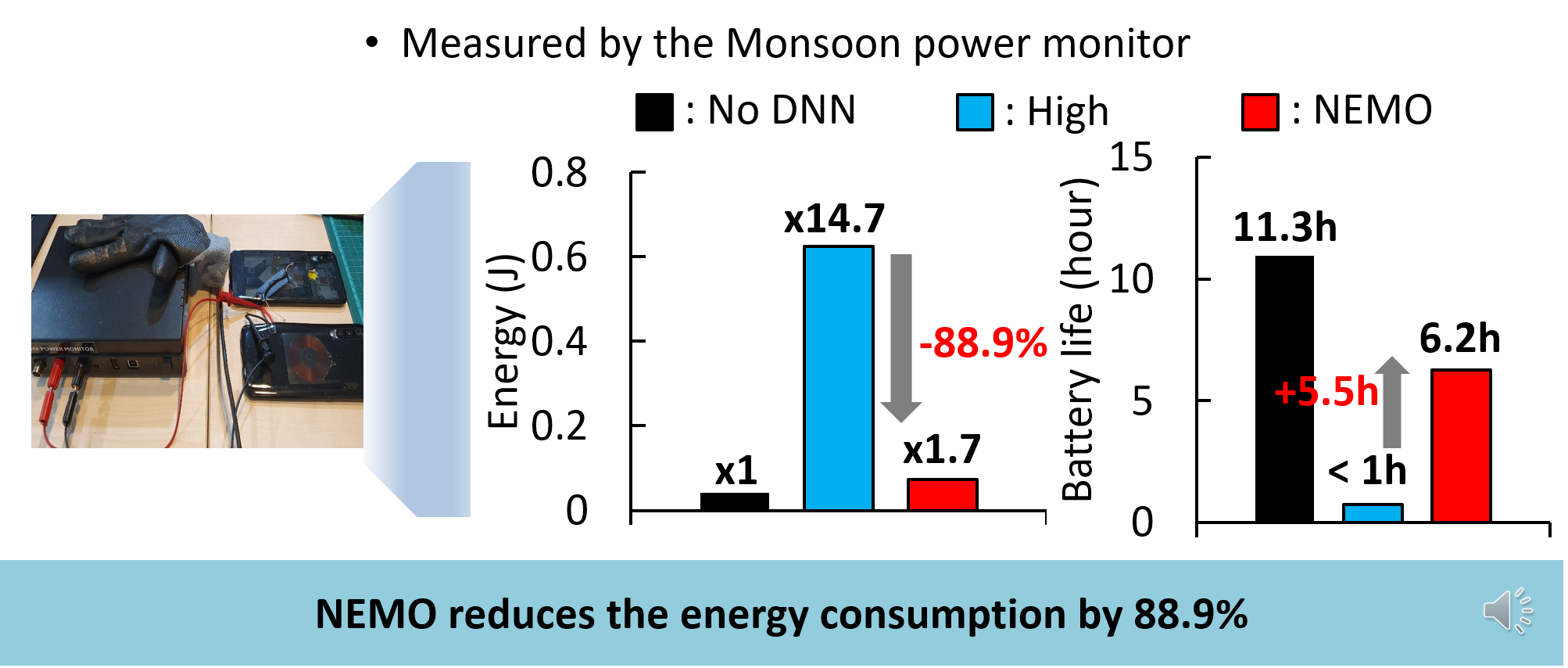
The research team remarkably improved the processing speed and drastically reduced the power consumption by utilizing the video dependency. Unlike the conventional technology that applied super-resolution for every single frame of a video, in this study, super-resolution is applied only to a small portion of frames and the results are recycled in the rest of the frame. The quality improvement of images per unit computing resource was maximized by carefully selecting frames to apply super-resolution, and the process of recycling super-resolution results was implemented o operate in real time by utilizing the video dependency information loaded in the compressed video.
The research team reported that the use of this technology can significantly improve the satisfaction of mobile users for video streaming. The technology is expected to be used in various fields related to video transmission/storage. Meanwhile, the results of this research were also announced at ACM Mobicom (Annual International Conference on Mobile Computing and Networking), one of the best conference in the field of mobile.
Detailed research information can be found at the link below.
Congratulations on Professor Dongsu Han’s remarkable achievement!
[Link]
Project website: http://ina.kaist.ac.kr/~nemo
Paper: https://dl.acm.org/doi/10.1145/3372224.3419185
Conference presentation video:
https://www.youtube.com/watch?v=GPHlAUYCk18&ab_channel=ACMSIGMOBILEONLINE
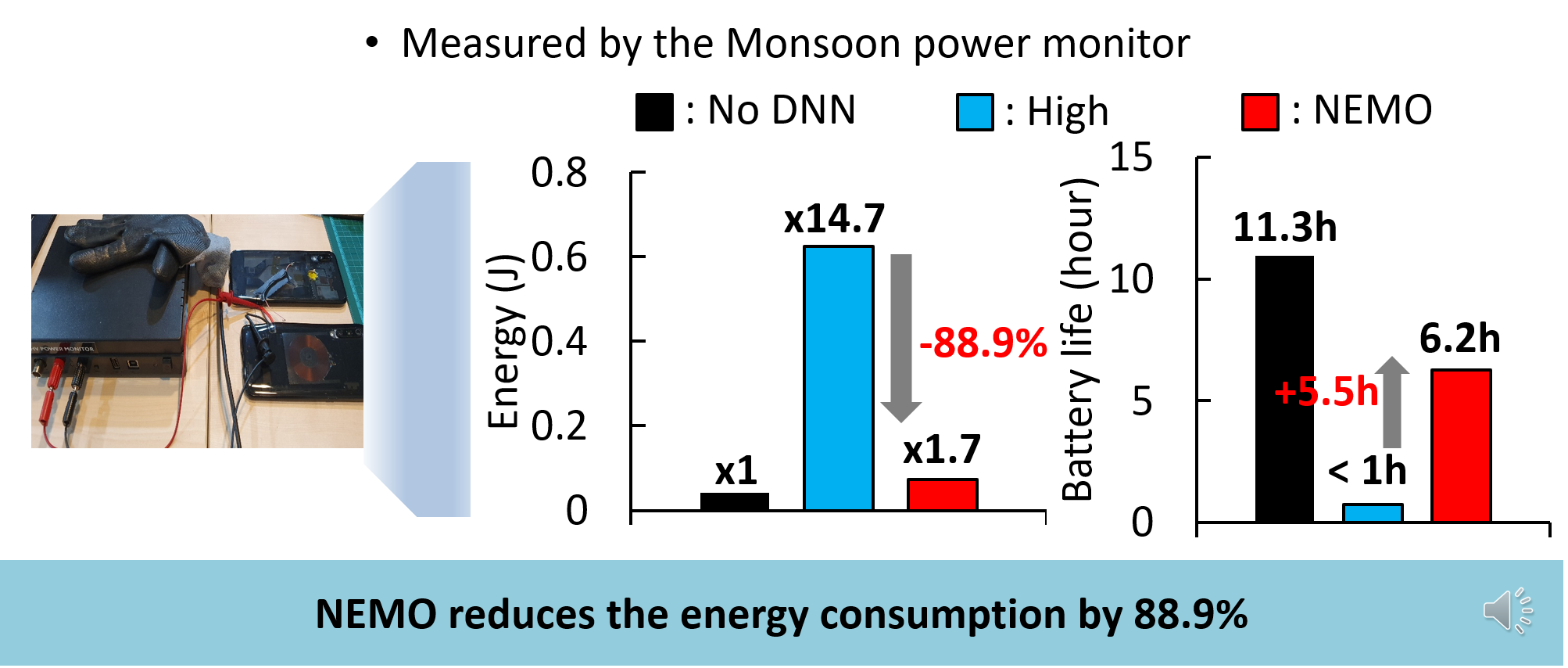
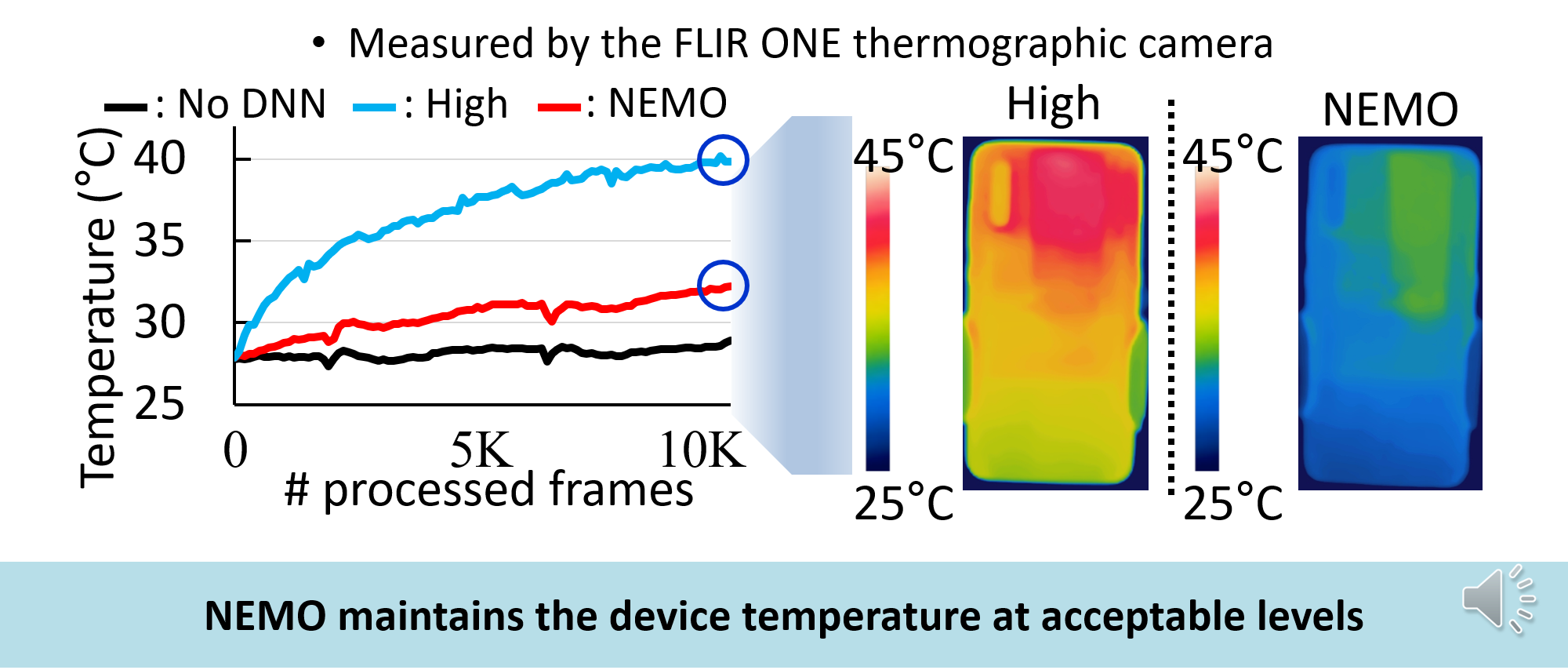
우리 학부 한동구 교수님 연구실 여현호 박사과정생이 주도하여 모바일 기기에서의 딥러닝 기반 비디오 초해상화 기술을 개발했습니다. 본 연구팀은 비디오 종속성을 활용하여 처리속도를 대폭적으로 향상시키고 전력 소모량을 획기적으로 감소시켰습니다. 매 프레임마다 초해상화를 적용하던 종래의 기술과 다르게, 본 연구에서는 일부 프레임에만 초해상화를 적용하고 나머지 프레임에서는 이 결과를 재활용합니다. 또한 초해상화를 적용할 프레임을 신중히 선택하여 단위 컴퓨팅 자원 당 화질 향상을 극대화하였고, 압축된 비디오 내에 탑재되어 있는 비디오 종속성 정보를 활용함으로써 초해상화 결과를 재활용하는 과정을 실시간으로 구현했습니다.
연구팀은 해당 기술을 이용하면 모바일 유저의 비디오 스트리밍 만족도를 대폭적으로 향상시킬 수 있다고 밝혔습니다. 또한 해당 기술은 비디오 전송/저장과 관련한 다양한 분야에서 활용될 것으로 예측됩니다. 한편, 이번 연구 성과는 모바일 최고 권위 학회인 ACM 모비콤 (Annual International Conference on Mobile Computing and Networking)에서 발표되기도 했습니다.
자세한 연구 내용은 아래의 링크에서 확인하실 수 있습니다.
컴퓨터 디비젼 한동수 교수님의 성과에 박수를 보내드립니다.
[논문정보]
학회명: The 26th Annual International Conference on Mobile Computing and Networking
논문명: NEMO: enabling neural-enhanced video streaming on commodity mobile devices
저자: 여현호 박사과정생, 정찬주 학부과정생, 정영목 박사과정생, 예준철 석사과정생
논문 링크: http://ina.kaist.ac.kr/~nemo