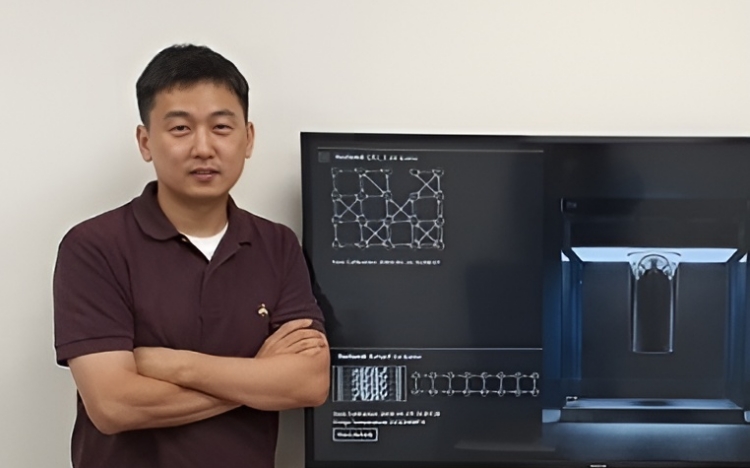
Professor Joungho Kim of our School has been selected as the recipient of the 7th Hanyang Baeknam Award in 2025.
The Hanyang Baeknam Award was established to honor and further develop the spirit of Dr. Yeonjun Kim (pen name Baeknam), the founder of Hanyang University. The award carries a total prize of 150 million KRW distributed among the laureates.
Professor Joungho Kim is the pioneer who established the fundamental concept and architecture of High Bandwidth Memory (HBM)—the core technology behind the world’s first successfully commercialized AI semiconductor. He has played a leading role in driving the growth of Korea’s semiconductor industry, including Samsung Electronics and SK hynix, and is recognized as a world-renowned scholar in the field of AI semiconductors.
Professor Kim has presented the “Next-Generation HBM Roadmap (HBM4–HBM8),” providing a technological vision through 2038, and has contributed to securing leadership in international standardization and technology development. In February, he received the 8th Dawon Kahng Award (Circuits and Systems field) in recognition of his achievements in HBM technology development.
Over the past 30 years, he has published 712 papers on HBM in international journals and conference proceedings, received 34 best paper awards, and advised 115 master’s and doctoral graduates, significantly contributing to nurturing high-level semiconductor talent in Korea. He has also actively promoted international technological exchange through collaborations with global big tech companies such as Google, NVIDIA, Apple, and Tesla.
Professor Jae-Woong Jeong of our School has been selected as the recipient of the Scientist of the Month Award for September.
The Scientist of the Month Award, jointly awarded by the Ministry of Science and ICT and the National Research Foundation of Korea, is given monthly to one researcher who has made significant contributions to the advancement of science and technology by producing outstanding R&D achievements over the past three years. The award includes the Minister’s commendation and a prize of 10 million KRW.
Professor Jeong was selected in recognition of his contributions to healthcare innovation through convergent research on wearable and implantable electronic devices and medical equipment. In particular, ahead of World Patient Safety Day(September 17), he developed an intravenous needle that softens at body temperature, thereby enhancing patient safety.
Intravenous (IV) injection is a method of delivering drugs directly into the bloodstream, enabling rapid effects and continuous administration. However, conventional IV needles made of rigid metal or plastic can damage vascular walls, cause complications such as phlebitis, and pose risks of accidental needle-stick injuries and subsequent infections among medical staff during disposal.
Professor Jeong developed a variable-stiffness* needle utilizing the property of liquid metal gallium, which changes phase from solid to liquid in response to body temperature. This innovation allows the needle to remain rigid at room temperature for insertion but become soft and tissue-like once inside the body. * Variable stiffness: The ability to adjust stiffness (degree of hardness) depending on situations or conditions.
This softening IV needle not only ensures patients’ freedom of movement but also prevents needle-stick injuries among medical staff by remaining soft at room temperature after use, while fundamentally blocking unethical reuse of needles.
<Intravenous Needle Softened by Body Temperature>
Furthermore, Professor Jeong also addressed the issue of drug leakage during IV injection, which causes local tissue temperature to drop. By integrating a nanoscale thin-film temperature sensor into the IV needle, he realized a real-time monitoring system of local body temperature, enabling immediate detection of IV drug leakage.
This research achievement, which provides a new vision for improving patient safety and ensuring healthcare worker protection in line with the requirements of the World Health Organization, was published as the cover article of the international journal Nature Biomedical Engineering in August 2024.
Professor Jeong stated, “This study is significant because it proposes a way to overcome the problems caused by conventional rigid medical needles and to prevent infections due to needle-stick accidents or reuse. Going forward, we will continue R&D efforts so that the softening needle technology can evolve into a core technology that enhances safety for both patients and medical staff in clinical practice.”
<(from left) Ph.D. Candidate Jeonghye Kim, M.S. Student Sojeong Rhee, and Prof. Youngchul Sung>
With the emergence of OpenAI’s ChatGPT at the end of 2022, generative Large Language Models (LLMs) have become one of the central research areas in artificial intelligence. Today, LLMs are evolving beyond simply understanding prompts and providing answers, into LLM Agents capable of interacting with their environments, engaging in multi-round actions, observations, and reasoning to accomplish assigned tasks. Such Agentic AI represents a key direction for future development, where AI systems autonomously interact with the environment to execute tasks without human intervention.
For example, when a household robot is given the task of “cooking soybean paste stew,” it must independently identify and gather the necessary ingredients, prepare them, place them in a pot, put the pot on the stove, turn on the heat, cook the stew, and finally turn off the stove once the dish is complete. Humans cannot provide instructions for each and every of these steps one by one: the robot must act, observe the results, reason about them, and determine its next action autonomously.
A representative LLM Agent model for this purpose is ReAct, introduced in 2023 by Google Brain and Princeton University. ReAct decides on actions step by step while taking future plans into account. However, ReAct suffers from limitations, as it often hallucinates or produces actions disconnected from reality.
To overcome these shortcomings, PhD student Jeonghye Kim and Master student Sojeong Rhee from Professor Youngchul Sung’s lab, in collaboration with Professor Kyomin Jung’s lab at Seoul National University, proposed a new LLM Agent model called ReflAct. The proposed ReflAct simultaneously considers the ultimate goal and the current situation at each step, thereby significantly reducing hallucination and enabling the agent to recognize its own mistakes. When combined with state-of-the-art reasoning LLMs, ReflAct achieved an impressive 93.3% task success rate on the ALFWorld benchmark, a simulated household environment.
This result is expected to accelerate the development of Agentic AI not only for household assistants but also for diverse applications such as scientific exploration and military operations. The work will be presented at the Main Conference of EMNLP 2025 this coming November.
Qunova Computing (hereafter “Qunova”), a venture start-up company founded in 2021 by Professor June‑Koo Kevin Rhee of our department, has achieved rapid growth and innovation since its establishment. This year, the company drew significant domestic and international attention by being included in the Forbes Asia 100 To Watch 2025 list—an accolade recognizing the most promising emerging startups in the Asia-Pacific region.
Qunova is Korea’s first quantum-computing solutions venture, providing general-purpose quantum software applications for molecular modeling and optimal design—tools widely applicable to cutting-edge fields such as new drug development and advanced materials. Of particular note, the company developed the hybrid quantum algorithm HiVQE for computational chemistry, which demonstrated performance surpassing that of supercomputers running classical algorithms. In recognition of this breakthrough, HiVQE was added this year to IBM’s Qiskit catalog, cementing its place as one of the world’s most practical and impactful quantum-computing software tools.
Building on its world-class quantum-software development capabilities, Qunova is actively engaging in collaborative research and attracting investment across diverse sectors. Since 2023, it has partnered with POSCO to explore the use of quantum computing in the development of eco-friendly next-generation materials. In addition, Qunova is working with Megazone Cloud, Korea’s leading managed service provider (MSP) for cloud computing, to study the application of quantum software on large-scale qubit systems. Last August, the company secured a Series A investment of 13.5 billion KRW (USD 10 million) from the Korea Development Bank, Company K Partners, and GS Ventures, further underscoring its strong growth potential. These achievements clearly demonstrate Qunova’s leadership in the domestic quantum-technology market.
Qunova’s continued innovation and bold initiatives are becoming a driving force for the advancement of Korea’s quantum-technology industry. The company is expected to maintain strong growth momentum in the years ahead, and we look forward to the community’s continued support and interest in its journey.
Professor Sanghyeon Kim of our school received the Merck Young Scientist Award at the 22nd Merck Award Ceremony, held on the 20th at BEXCO in Busan.
The Merck Award is a technical paper award established in 2004 by Merck, a leading German science and technology company, together with the Korean Information Display Society. It is presented to honor outstanding research achievements in the field of display technology and to support the development of the Korean display industry.
Professor Kim has been at the forefront of securing key original intellectual property (IP) in inorganic-based MicroLED display technology through independent domestic technology. He has continued pioneering research that enables the realization of ultra-high-resolution and low-power AR/VR displays. As a result, he has developed world-class MicroLED pixels, contributing to innovation in display technology.
In particular, he successfully implemented a technology that allows direct integration of MicroLEDs onto a complementary metal-oxide semiconductor (CMOS) backplane in a single process, thereby realizing an ultra-high-resolution red display of 1700 PPI (pixels per inch), which was highly recognized.* CMOS (Complementary Metal-Oxide Semiconductor): The circuit substrate that drives the display.
In his acceptance speech, Professor Kim stated, “I am truly grateful and deeply honored to receive the Merck Young Scientist Award, and I feel a great sense of responsibility. I will continue to devote myself as a researcher to ensure that MicroLED display technology translates into tangible industrial competitiveness.”
< (From left) Professor Young Min Song (KAIST School of Electrical Engineering) a nd Professor Dong-Ho Kang (Gwangju Institute of Science and Technology, GIST). >
Our school’s research team has developed a next-generation image sensor that can autonomously adapt to drastic changes in illumination without any external image-processing pipeline. The technology is expected to be applicable to autonomous vehicles, intelligent robotics, security and surveillance, and other vision-centric systems.
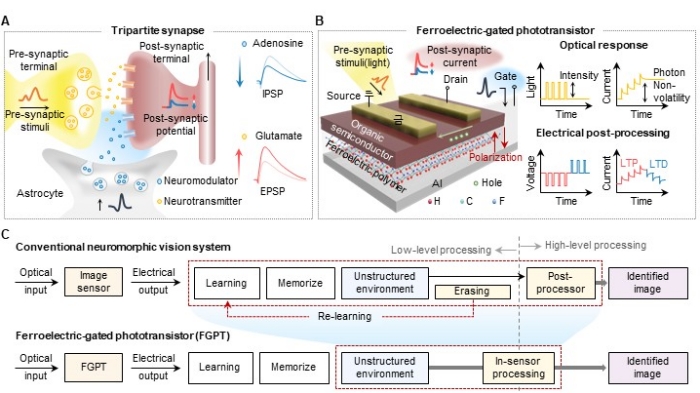
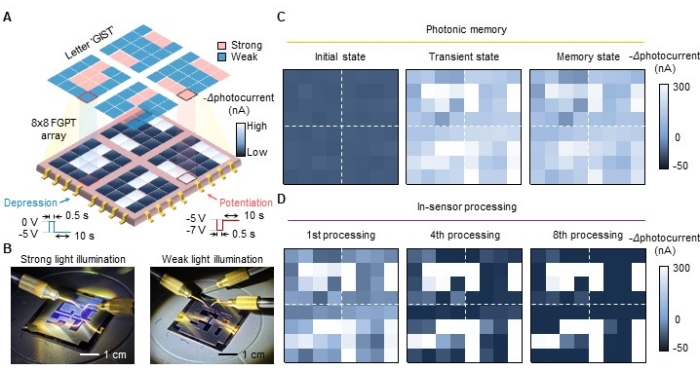
In this joint work, KAIST School of Electrical Engineering Professor Young Min Song and GIST Professor Dong-Ho Kang designed a ferroelectric-based optoelectronic device inspired by the brain’s neural architecture. The device integrates light sensing, memory (recording), and in-sensor processing within a single element, enabling a new class of image sensors.
As demand grows for “Visual AI,” there is an urgent need for high-performance visual sensors that operate robustly across diverse environments. Conventional CMOS-based image sensors* process each pixel’s signal independently; when scene brightness changes abruptly, they are prone to saturation, overexposure or underexposure, leading to information loss. *CMOS (complementary metal-oxide semiconductor) image sensors are fabricated using semiconductor processes and are widely used in digital cameras, smartphones, and other consumer electronics.
In particular, they struggle to adapt instantly to extremes such as day/night transitions, strong backlighting, or rapid indoor-outdoor changes, often requiring separate calibration or post-processing of the captured data.
< Figure 1. Ferroelectric phototransistor emulating a three-terminal synapse >
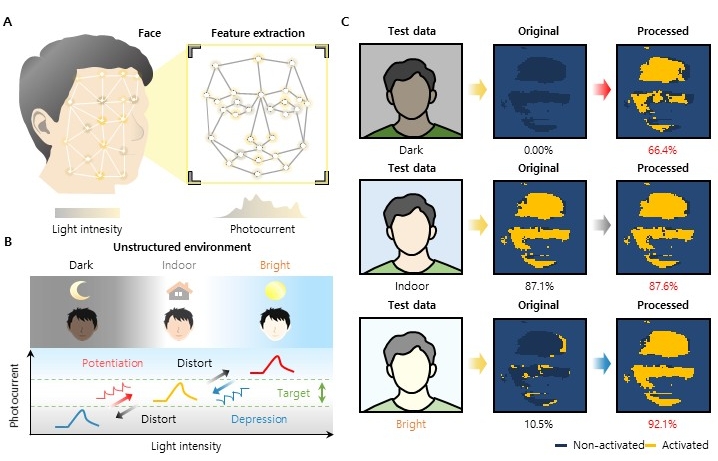
To address these limitations, the team designed a ferroelectric-based image sensor that draws on biological neural structures and learning principles to remain adaptive under extreme environmental variation. By controlling the ferroelectric polarization state, the device can retain sensed optical information for extended periods and selectively amplify or suppress it. As a result, it performs contrast enhancement, illumination compensation, and noise suppression on-sensor, eliminating the need for complex post-processing. The team demonstrated stable face recognition across day/night and indoor/outdoor conditions solely via in-sensor processing, without reconstructing training datasets or performing additional training to handle unstructured environments.
< Figure 2. Image-processing experiments using an array of ferroelectric phototransistors >
The proposed device is also highly compatible with established AI training algorithms such as convolutional neural networks (CNNs).
CNNs are deep-learning architectures specialized for 2D data such as images and videos, which extract features through convolution operations and perform classification. They are widely used in visual tasks including face recognition, autonomous driving, and medical image analysis.
< Figure 3. Example of face recognition using the integrated sense-record-process optoelectronic device >
Professor Young Min Song commented, “This study expands ferroelectric devices, traditionally used as electrical memory, into the domains of neuromorphic vision and in-sensor computing. Going forward, we plan to advance this platform into next-generation vision systems capable of precisely sensing and processing wavelength, polarization, and phase of light.”
This research was supported by the Mid-career Researcher Program of the Ministry of Science and ICT and the National Research Foundation of Korea (NRF). The results were published online in the international journal “Advanced Materials” on July 28th.
<(from left to right) : Professor Seunghyup Yoo , Dr. Jee Hoon Sim and OLED contact lens sample (center) >
Electroretinography (ERG) is an ophthalmic diagnostic method used to determine whether the retina is functioning normally. It is widely employed for diagnosing hereditary retinal diseases or assessing retinal function decline.
A team of Korean researchers has developed a next-generation wireless ophthalmic diagnostic technology that replaces the existing stationary, darkroom-based retinal testing method by incorporating an “ultrathin OLED” into a contact lens. This breakthrough is expected to have applications in diverse fields such as myopia treatment, ocular biosignal analysis, augmented-reality (AR) visual information delivery, and light-based neurostimulation.
A research team led by Professor Seunghyup Yoo from the School of Electrical Engineering, in collaboration with Professor Se Joon Woo of Seoul National University Bundang Hospital, Professor Sei Kwang Hahn of POSTECH, the CEO of PHI Biomed Co., and the Electronics and Telecommunications Research Institute under the National Research Council of Science & Technology, has developed the world’s first wireless, contact lens-based wearable retinal diagnostic platform using organic light-emitting diodes (OLEDs).
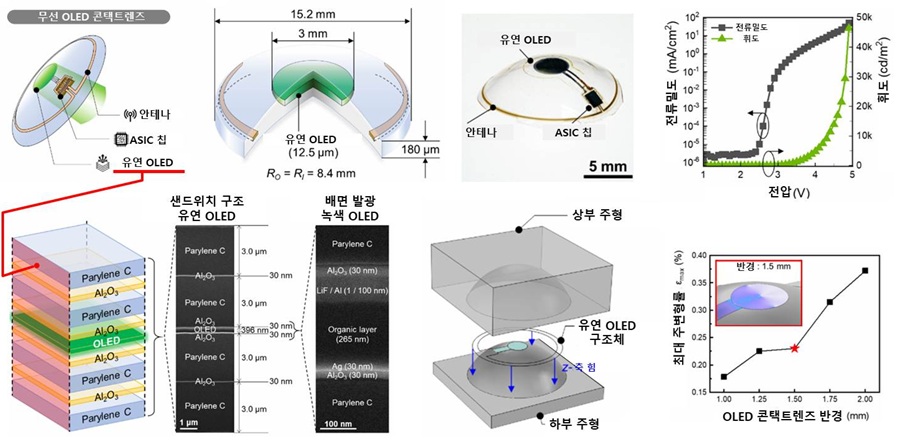
<Figure 1. Schematic and photograph of the wireless OLED contact lens>
This technology enables ERG simply by wearing the lens, eliminating the need for large specialized light sources and dramatically simplifying the conventional, complex ophthalmic diagnostic environment.
Traditionally, ERG requires the use of a stationary Ganzfeld device in a dark room, where patients must keep their eyes open and remain still during the test. This setup imposes spatial constraints and can lead to patient fatigue and compliances challenges.
To overcome these limitations, the joint research team integrated an ultrathin flexible OLED —approximately 12.5 μm thick, or 6–8 times thinner than a human hair— into a contact lens electrode for ERG. They also equipped it with a wireless power receiving antenna and a control chip, completing a system capable of independent operation.
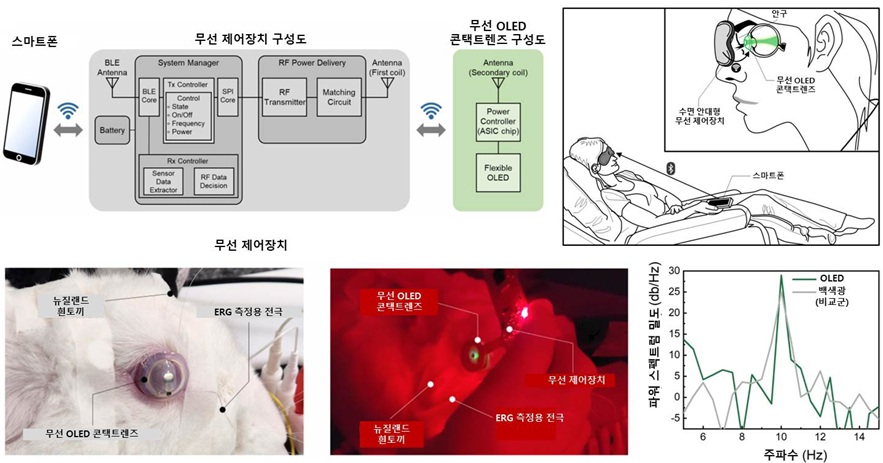
For power transmission, the team adopted a wireless power transfer method using a 433 MHz resonant frequency suitable for stable wireless communication. This was also demonstrated in the form of a wireless controller embedded in a sleep mask, which can be linked to a smartphone —further enhancing practical usability.
Figure 2. Schematic of the electroretinography (ERG) testing system using a wireless OLED contact lens and an example of an actual test in progress>
While most smart contact lens–type light sources developed for ocular illumination have used inorganic LEDs, these rigid devices emit light almost from a single point, which can lead to excessive heat accumulation and thus usable light intensity. In contrast, OLEDs are areal light sources and were shown to induce retinal responses even under low luminance conditions. In this study, under a relatively low luminance* of 126 nits, the OLED contact lens successfully induced stable ERG signals, producing diagnostic results equivalent to those obtained with existing commercial light sources. *Luminance: A value indicating how brightly a surface or screen emits light; for reference, the luminance of a smartphone screen is about 300–600 nits (can exceed 1000 nits at maximum).
Animal tests confirmed that the surface temperature of a rabbit’s eye wearing the OLED contact lens remained below 27°C, avoiding corneal heat damage, and that the light-emitting performance was maintained even in humid environments—demonstrating its effectiveness and safety as an ERG diagnostic tool in real clinical settings.
Professor Seunghyup Yoo stated that “integrating the flexibility and diffusive light characteristics of ultrathin OLEDs into a contact lens is a world-first attempt,” and that “this research can help expand smart contact lens technology into on-eye optical diagnostic and phototherapeutic platforms, contributing to the advancement of digital healthcare technology.”
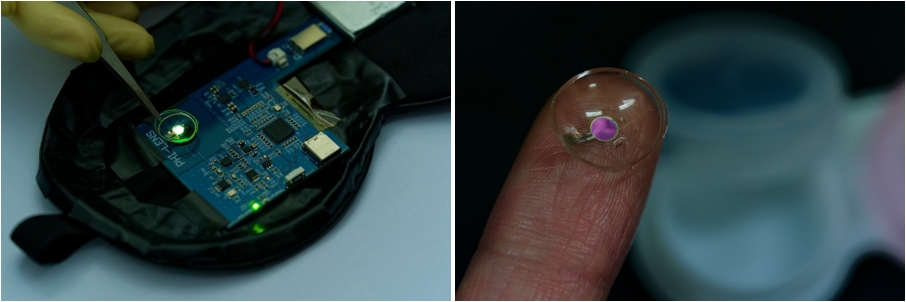
<(left) Wireless operation of the OLED contact lens (right) Close-up of the OLED contact lens sample>
Jee Hoon Sim, Hyeonwook Chae, and Su-Bon Kim, PhD researchers at KAIST, played a key role as co-first authors alongside Dr. Sangbaie Shin of PHI Biomed Co.. Corresponding authors are Professor Seunghyup Yoo (School of Electrical Engineering, KAIST), Professor Sei Kwang Hahn (Department of Materials Science and Engineering, POSTECH), and Professor Se Joon Woo (Seoul National University Bundang Hospital). The results were published online in the internationally renowned journal ACS Nano on May 1st.
– Paper title: Wireless Organic Light-Emitting Diode Contact Lenses for On-Eye Wearable Light Sources and Their Application to Personalized Health Monitoring
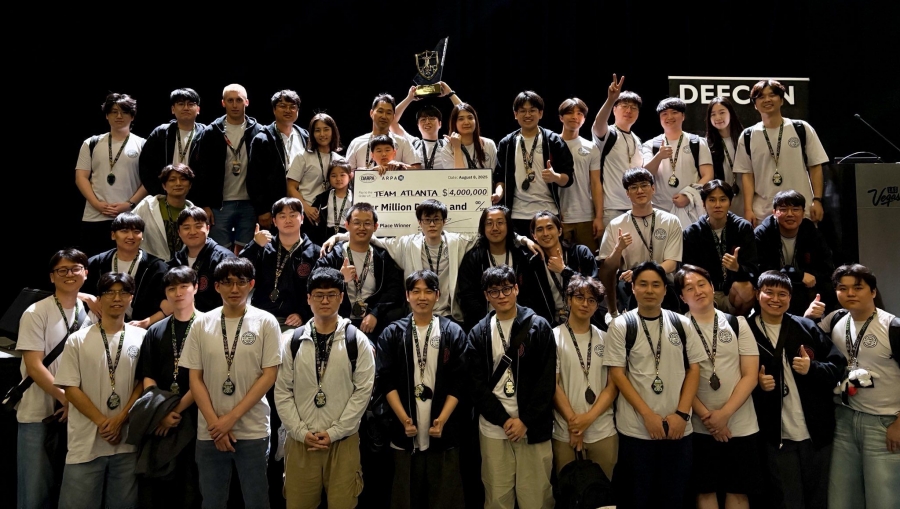
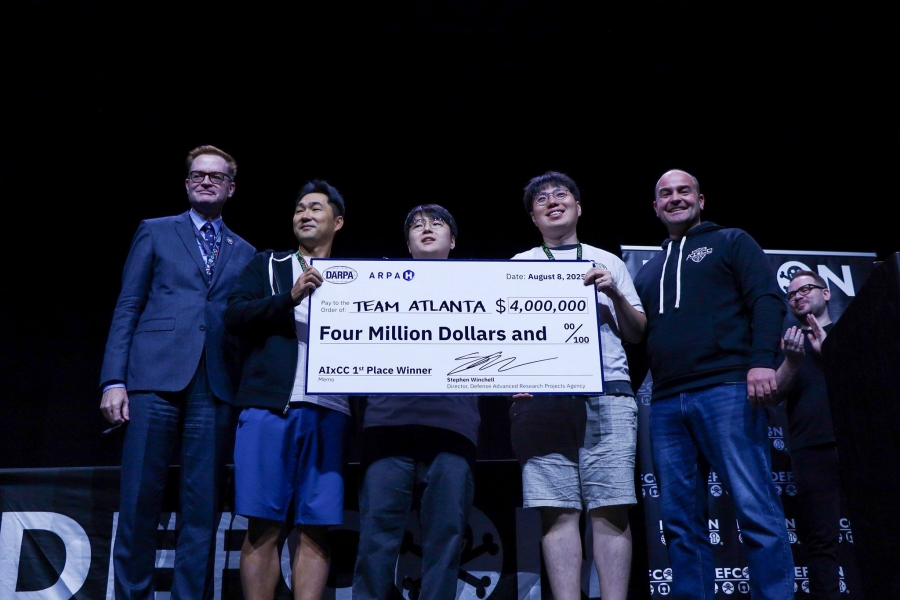
With participation from Professor Insu Yun’s research team at KAIST’s School of Electrical Engineering, Samsung Research, POSTECH, and Georgia Institute of Technology formed “Team Atlanta” and won first place in the AI Cyber Challenge (AIxCC) hosted by the U.S. Defense Advanced Research Projects Agency (DARPA) at the world’s largest hacking conference, DEF CON 33, held in Las Vegas on August 8 (local time).
Led by Taesoo Kim of Samsung Research and Georgia Institute of Technology, Team Atlanta earned USD 4 million (approx. KRW 5.5 billion) in prize money, proving the excellence of AI-based autonomous cyber defense technology on the global stage.
<(from left, second)Taesoo Kim, Samsung Research and Georgia Institute of Technology; Hyungseok Han, Samsung Research America; Professor Insu Yun>
The AI Cyber Challenge (AIxCC) is a two-year global competition jointly organized by DARPA and the U.S. Advanced Research Projects Agency for Health (ARPA-H). It challenges teams to use AI-based Cyber Reasoning Systems (CRS) to automatically analyze, detect, and fix software vulnerabilities. The total prize pool is USD 29.5 million, with USD 4 million awarded to the final winner.
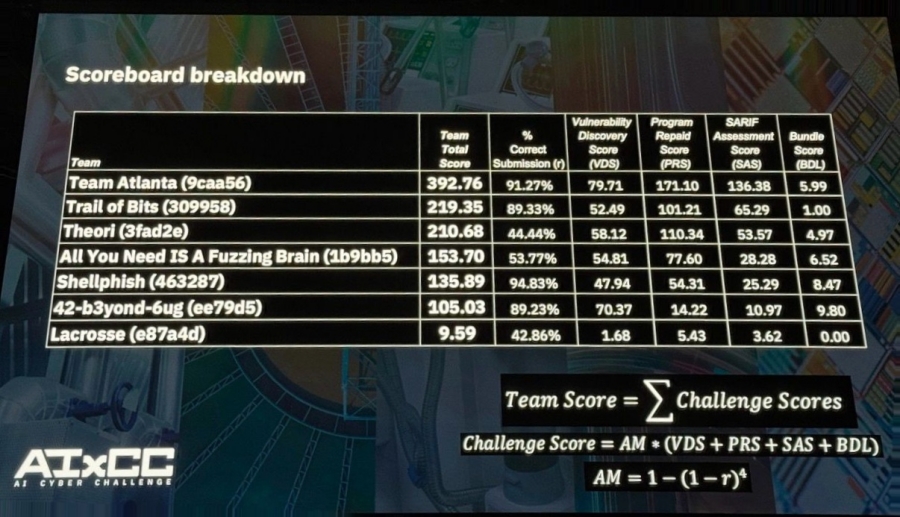
In the final round, Team Atlanta scored 392.76 points, beating second-place Trail of Bits by more than 170 points to secure a decisive victory.
The Cyber Reasoning System (CRS) developed by Team Atlanta successfully detected various types of vulnerabilities and patched many of them in real time during the competition. Among the 70 artificially injected vulnerabilities in the final, the seven finalist teams detected an average of 77% and patched 61% of them. In addition, they discovered 18 previously unknown vulnerabilities in real-world software, demonstrating the potential of AI security technology.
<Final results scoreboard – overwhelming victory by a margin of over 170 points>
All CRS technologies, including that of the winning team, will be made open source and are expected to be used to strengthen the security of critical infrastructure such as hospitals, water systems, and power grids.
Professor Insu Yun said, “I am very pleased with this tremendous achievement. This victory demonstrates that Korea’s cybersecurity research has reached the highest global standards, and it was meaningful to showcase the capabilities of Korean researchers on the world stage. We will continue research that combines AI and security technologies to safeguard the digital safety of both our nation and the global community.”
KAIST President Kwang Hyung Lee stated, “This victory is another proof that KAIST is a global leader in the convergence of future cybersecurity and artificial intelligence. We will continue to provide full support so that our researchers can compete confidently on the world stage and achieve outstanding results.”
For the first time world, a Korean research team has devised and experimentally validated a “Measurement‐protection (MP)” theory that enables stable quantum key distribution (QKD) without any measurement calibration.
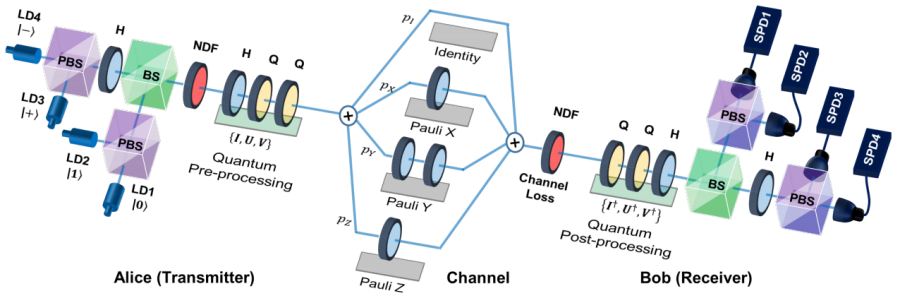
Professor Joonwoo Bae’s team from our School, in collaboration with the Quantum Communications Laboratory at the Electronics and Telecommunications Research Institute (ETRI), has developed a new technology that enables stable quantum communication in moving environments such as satellites, ships, and drones.
Quantum communication is a high-precision technology that transmits information via the quantum states of light, but in wireless, moving environments it has suffered from severe instability due to weather and surrounding environmental changes. In particular, in rapidly changing settings like the sky, sea, or air, reliably delivering quantum states has been extremely challenging.
This research is significant as it overcomes those limitations and opens up possibility of exchanging quantum information stably even while in motion. It is expected that quantum technology can be applied in the future to secure communications between satellites and ground stations, as well as to drone and maritime communications.
Quantum key distribution (QKD) is a technology that uses the principles of quantum mechanics to distribute cryptographic keys that are fundamentally immune to eavesdropping. Existing QKD protocols required repeated recalibration of the receiver’s measurement devices whenever the channel conditions changed.
However, in this work the team proved that, with only simple local operations, stable key distribution is possible regardless of channel conditions. The theory was developed by Professor Bae’s group, and the experiments were carried out by ETRI researchers.
To generate single-photon pulses, the researchers used a 100 MHz light source: a vertical-cavity surface-emitting laser (VCSEL). A VCSEL is a type of semiconductor laser whose beam is emitted vertically from the top surface of the chip.
They emulated a long-distance free-space link with up to 30 dB loss over a 10 m path and inserted various polarization noise to simulate a wireless environment. Even under these harsh conditions, they confirmed that quantum transmission and measurement remained reliable. Both the transmitter and receiver were equipped with three waveplates each to implement the required local operations.
As a result, they demonstrated that an MP-based QKD system can raise the system’s maximum tolerable quantum bit error rate (QBER), the fraction of transmitted qubits received in error, by up to 20.7% compared to conventional approaches.
In other words, if the received QBER is below 20.7%, stable quantum key distribution is possible without any measurement calibration. This establishes the foundation for implementing reliable quantum communication across a variety of noisy channel environments. The team believes this achievement can be applied to scenarios similar to satellite-ground links.
The study was published on June 25 in the IEEE’s prestigious communications journal, “Journal on Selected Areas in Communications”, with ETRI’s Heasin Ko and KAIST’s Spiros Kechrimparis serving as co-first authors.
Professor Bae commented, “This result will be a decisive turning point in bringing reliable quantum-secure communication into practical reality, even under complex environments.”
This research was supported by the Ministry of Science and ICT and the Institute for Information & Communications Technology Planning & Evaluation (IITP) through the “Core Technology Development for Quantum Internet,” “ETRI R&D Support Project,” “Quantum Cryptography Communication Industry Expansion and Next-Generation Technology Development Project,” “Quantum Cryptography Communication Integration and Transmission Technology Advancement Project,” and “SW Computing Industrial Core Technology Development Project”; by the National Research Foundation of Korea through the “Quantum Common-Base Technology Development Project” and “Mid-Career Researcher Program”; and as part of the Future Space Education Center initiative of the Korea Aerospace Agency.
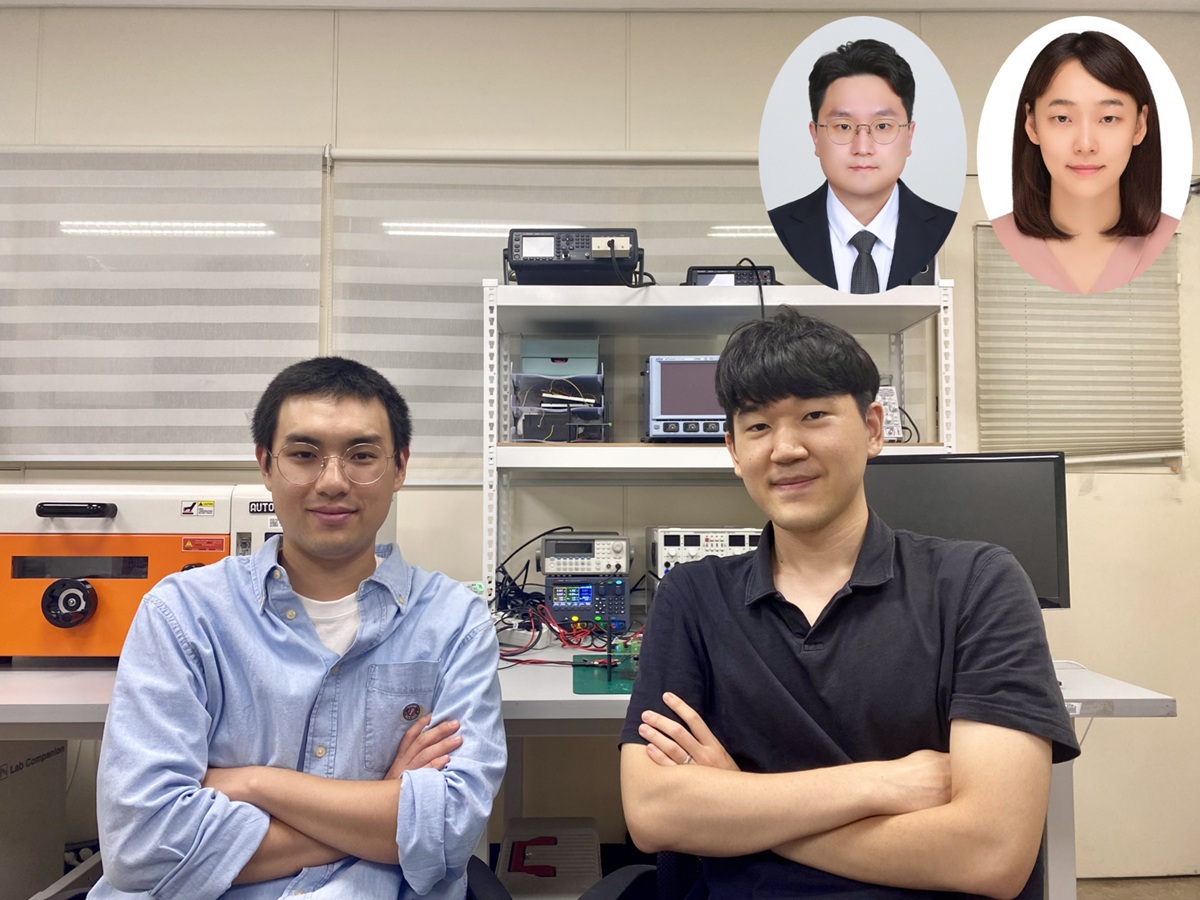
<(From left) Ph.D candidate Youngmin Sim, Ph.D candidate Do Yun Park, Dr. Chanho Park, Professor Kyeongha Kwon>
Miniaturization and weight reduction of medical wearable devices for continuous health monitoring such as heart rate, blood oxygen saturation, and sweat component analysis remain major challenges. In particular, optical sensors consume a significant amount of power for LED operation and wireless transmission, requiring heavy and bulky batteries. To overcome these limitations, KAIST EE researchers have developed a next-generation wearable platform that enables 24-hour continuous measurement by using ambient light as an energy source and optimizing power management according to the power environment.
Professor Kyeongha Kwon’s team from the School of Electrical Engineering, in collaboration with Dr. Chanho Park’s team at Northwestern University in the U.S., has developed an adaptive wireless wearable platform that reduces battery load by utilizing ambient light.
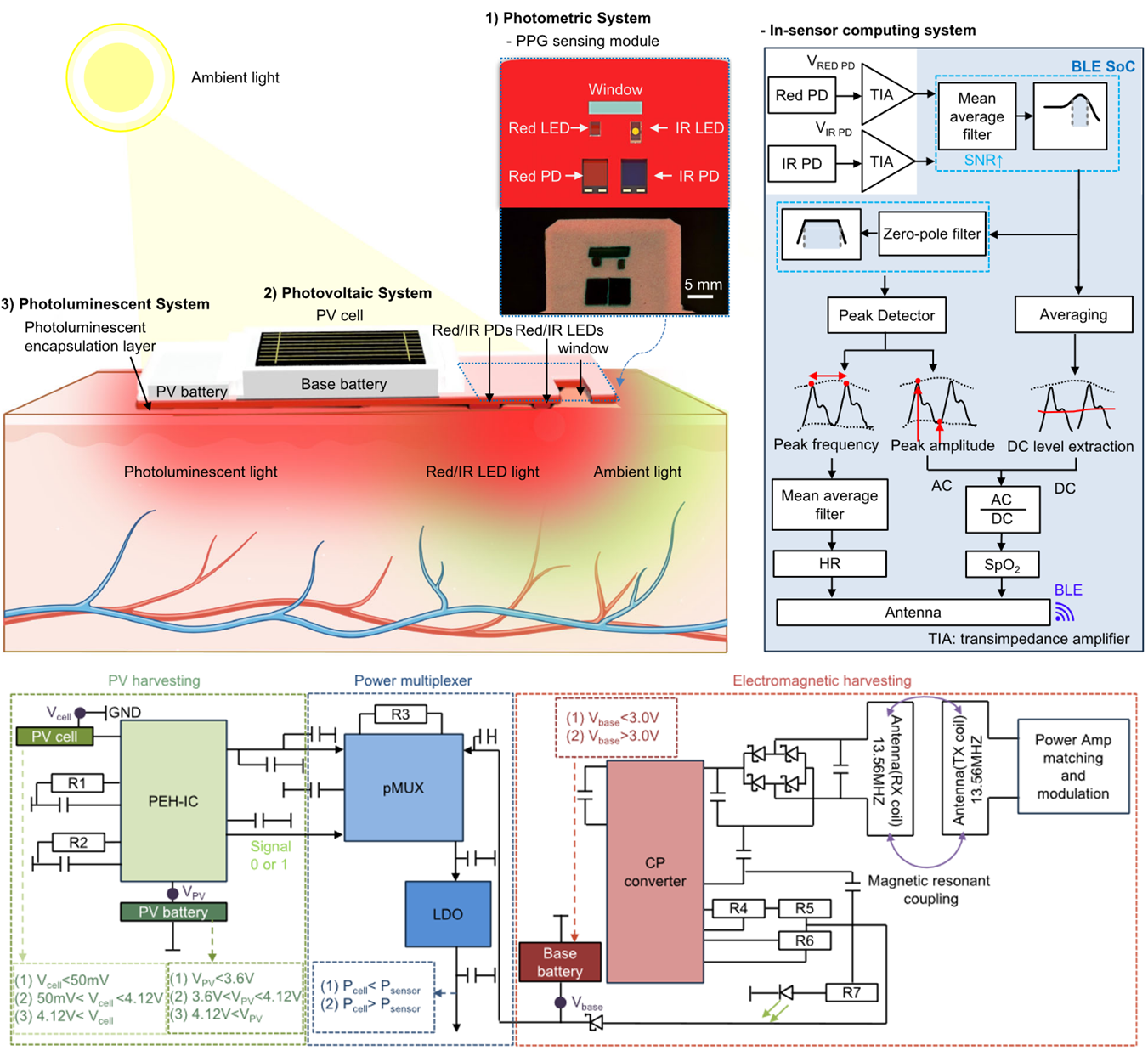
To address the battery issue of medical wearable devices, Professor Kyeongha Kwon’s research team developed an innovative platform that utilizes ambient natural light as an energy source. This platform integrates three complementary light energy technologies.
<Figure1.The wireless wearable platform minimizes the energy required for light sources through i) Photometric system that directly utilizes ambient light passing through windows for measurements, ii) Photovoltaic system that receives power from high-efficiency photovoltaic cells and wireless power receiver coils, and iii) Photoluminescent system that stores light using photoluminescent materials and emits light in dark conditions to support the two aforementioned systems. In-sensor computing minimizes power consumption by wirelessly transmitting only essential data. The adaptive power management system efficiently manages power by automatically selecting the optimal mode among 11 different power modes through a power selector based on the power supply level from the photovoltaic system and battery charge status.>
The first core technology, the Photometric Method, is a technique that adaptively adjusts LED brightness depending on the intensity of the ambient light source. By combining ambient natural light with LED light to maintain a constant total illumination level, it automatically dims the LED when natural light is strong and brightens it when natural light is weak.
Whereas conventional sensors had to keep the LED on at a fixed brightness regardless of the environment, this technology optimizes LED power in real time according to the surrounding environment. Experimental results showed that it reduced power consumption by as much as 86.22% under sufficient lighting conditions.
The second is the Photovoltaic Method using high-efficiency multijunction solar cells. This goes beyond simple solar power generation to convert light in both indoor and outdoor environments into electricity. In particular, the adaptive power management system automatically switches among 11 different power configurations based on ambient conditions and battery status to achieve optimal energy efficiency.
The third innovative technology is the Photoluminescent Method. By mixing strontium aluminate microparticles* into the sensor’s silicone encapsulation structure, light from the surroundings is absorbed and stored during the day and slowly released in the dark. As a result, after being exposed to 500W/m² of sunlight for 10 minutes, continuous measurement is possible for 2.5 minutes even in complete darkness. *Strontium aluminate microparticles: A photoluminescent material used in glow-in-the-dark paint or safety signs, which absorbs light and emits it in the dark for an extended time.
These three technologies work complementarily—during bright conditions, the first and second methods are active, and in dark conditions, the third method provides additional support—enabling 24-hour continuous operation.
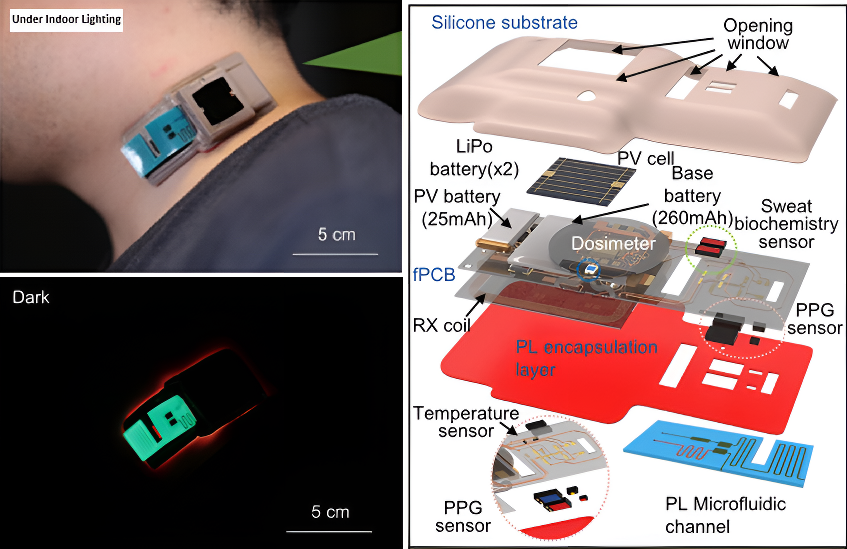
The research team applied this platform to various medical sensors to verify its practicality. The photoplethysmography sensor monitors heart rate and blood oxygen saturation in real time, allowing early detection of cardiovascular diseases. The blue light dosimeter accurately measures blue light, which causes skin aging and damage, and provides personalized skin protection guidance. The sweat analysis sensor uses microfluidic technology to simultaneously analyze salt, glucose, and pH in sweat, enabling real-time detection of dehydration and electrolyte imbalances.
Additionally, introducing in-sensor data computing significantly reduced wireless communication power consumption. Previously, all raw data had to be transmitted externally, but now only the necessary results are calculated and transmitted within the sensor, reducing data transmission requirements from 400B/s to 4B/s—a 100-fold decrease.
To validate performance, the research tested the device on healthy adult subjects in four different environments: bright indoor lighting, dim lighting, infrared lighting, and complete darkness. The results showed measurement accuracy equivalent to that of commercial medical devices in all conditions A mouse model experiment confirmed accurate blood oxygen saturation measurement in hypoxic conditions.
<Figure2.The multimodal device applying the energy harvesting and power management platform consists of i) photoplethysmography (PPG) sensor, ii) blue light dosimeter, iii) photoluminescent microfluidic channel for sweat analysis and biomarker sensors (chloride ion, glucose, and pH), and iv) temperature sensor. This device was implemented with flexible printed circuit board (fPCB) to enable attachment to the skin. A silicon substrate with a window that allows ambient light and measurement light to pass through, along with photoluminescent encapsulation layer, encapsulates the PPG, blue light dosimeter, and temperature sensors, while the photoluminescent microfluidic channel is attached below the photoluminescent encapsulation layer to collect sweat>
Professor Kyeongha Kwon of KAIST, who led the research, stated, “This technology will enable 24-hour continuous health monitoring, shifting the medical paradigm from treatment-centered to prevention-centered shifting the medical paradigm from treatment-centered to prevention-centered,” further stating that “cost savings through early diagnosis as well as strengthened technological competitiveness in the next-generation wearable healthcare market are anticipated.”
This research was published on July 1 in the international journal Nature Communications, with Do Yun Park, a doctoral student in the AI Semiconductor Graduate Program, as co–first author. ※ Paper title: Adaptive Electronics for Photovoltaic, Photoluminescent and Photometric Methods in Power Harvesting for Wireless and Wearable Sensors ※ DOI:https://doi.org/10.1038/s41467-025-60911-1 ※ URL:https://www.nature.com/articles/s41467-025-60911-1
This research was supported by the National Research Foundation of Korea (Outstanding Young Researcher Program and Regional Innovation Leading Research Center Project), the Ministry of Science and ICT and Institute of Information & Communications Technology Planning & Evaluation (IITP) AI Semiconductor Graduate Program, and the BK FOUR Program (Connected AI Education & Research Program for Industry and Society Innovation, KAIST EE).